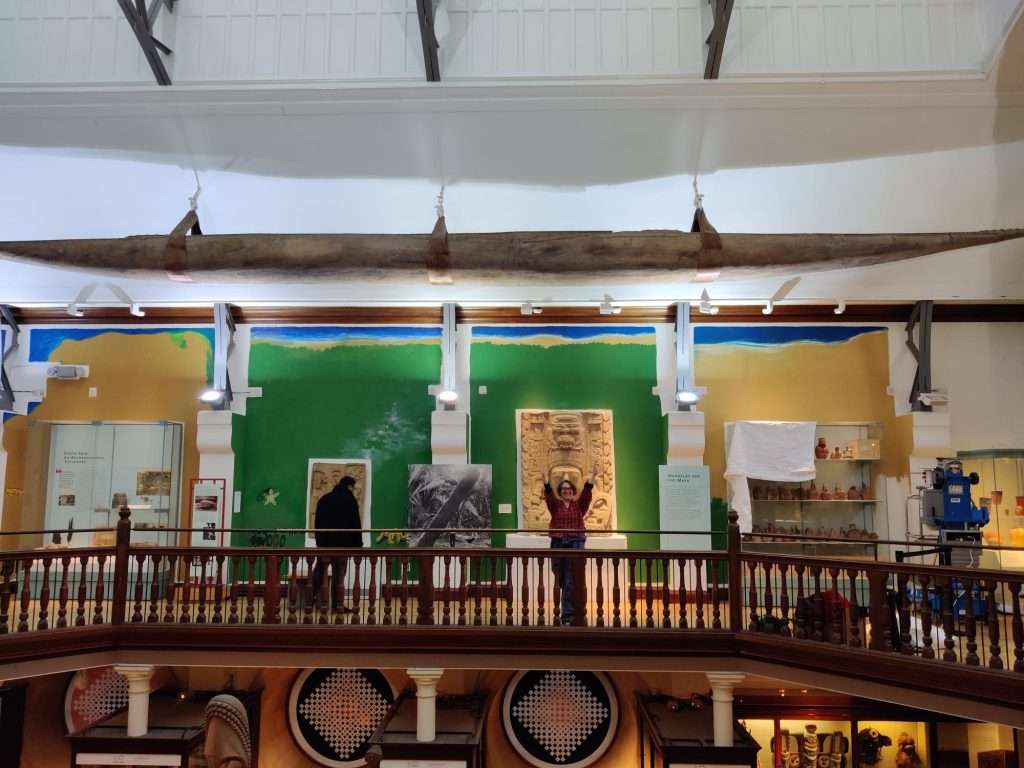
People and Stuff: A Subversive Collaboration (launched March 2025)
People and Stuff: A Subversive Collaboration
A site-specific painting
Approx 50m x 3m
Launched March 2025 and ongoing
Museum of Archaeology and Anthropology, University of Cambridge
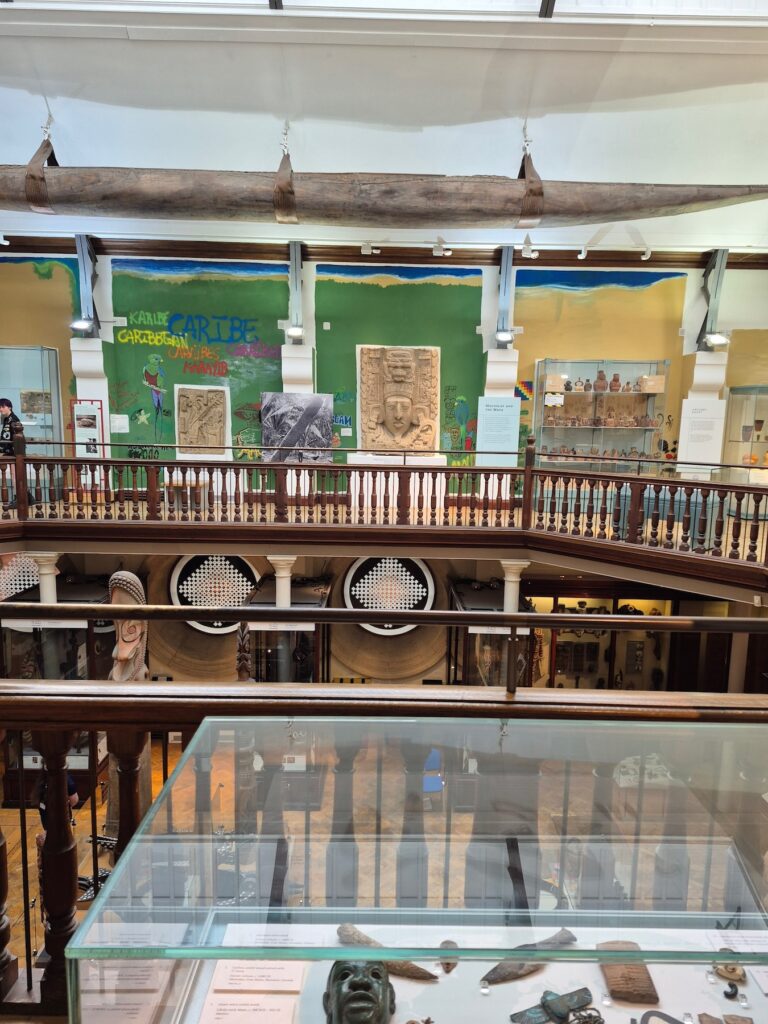
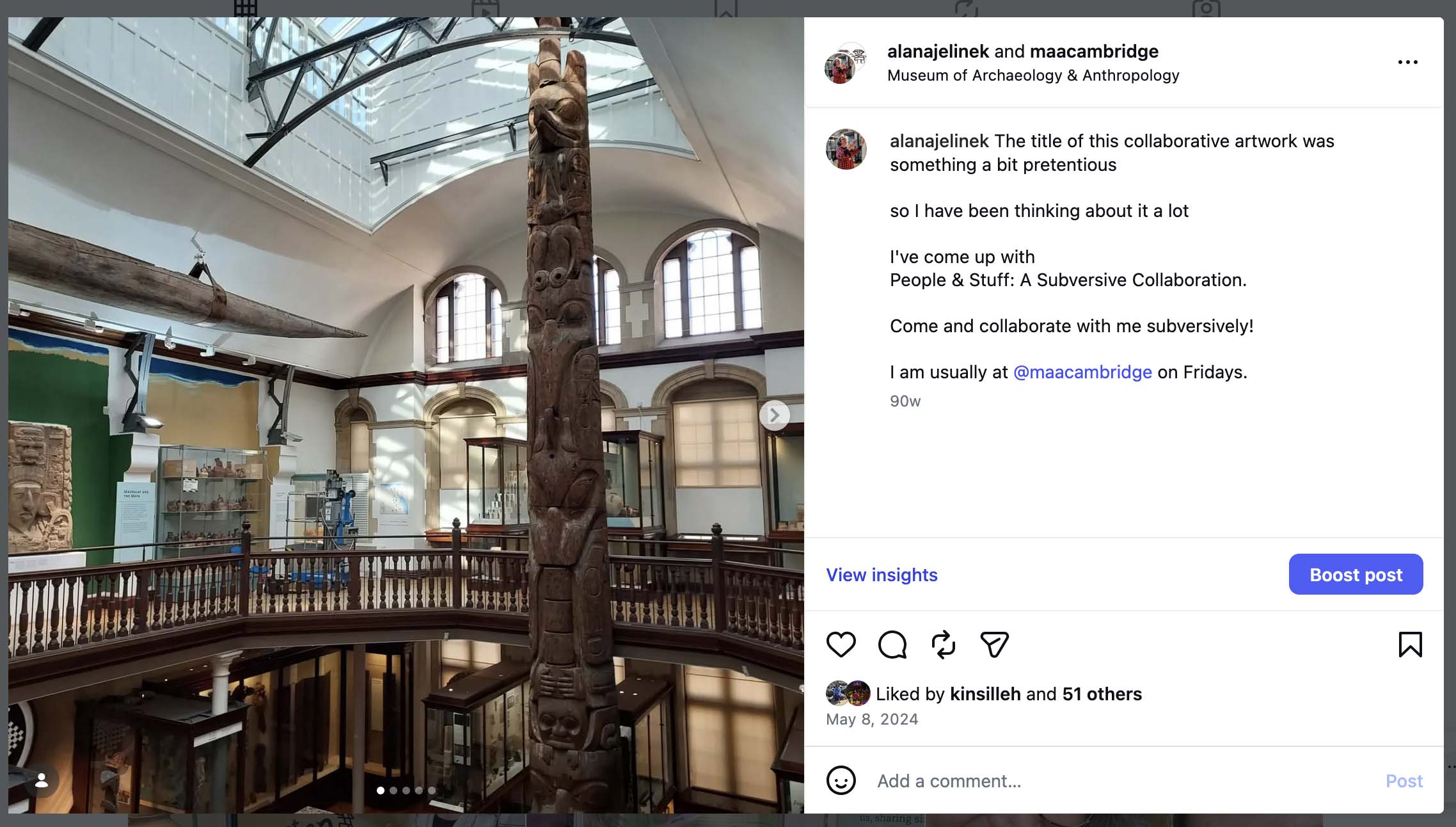
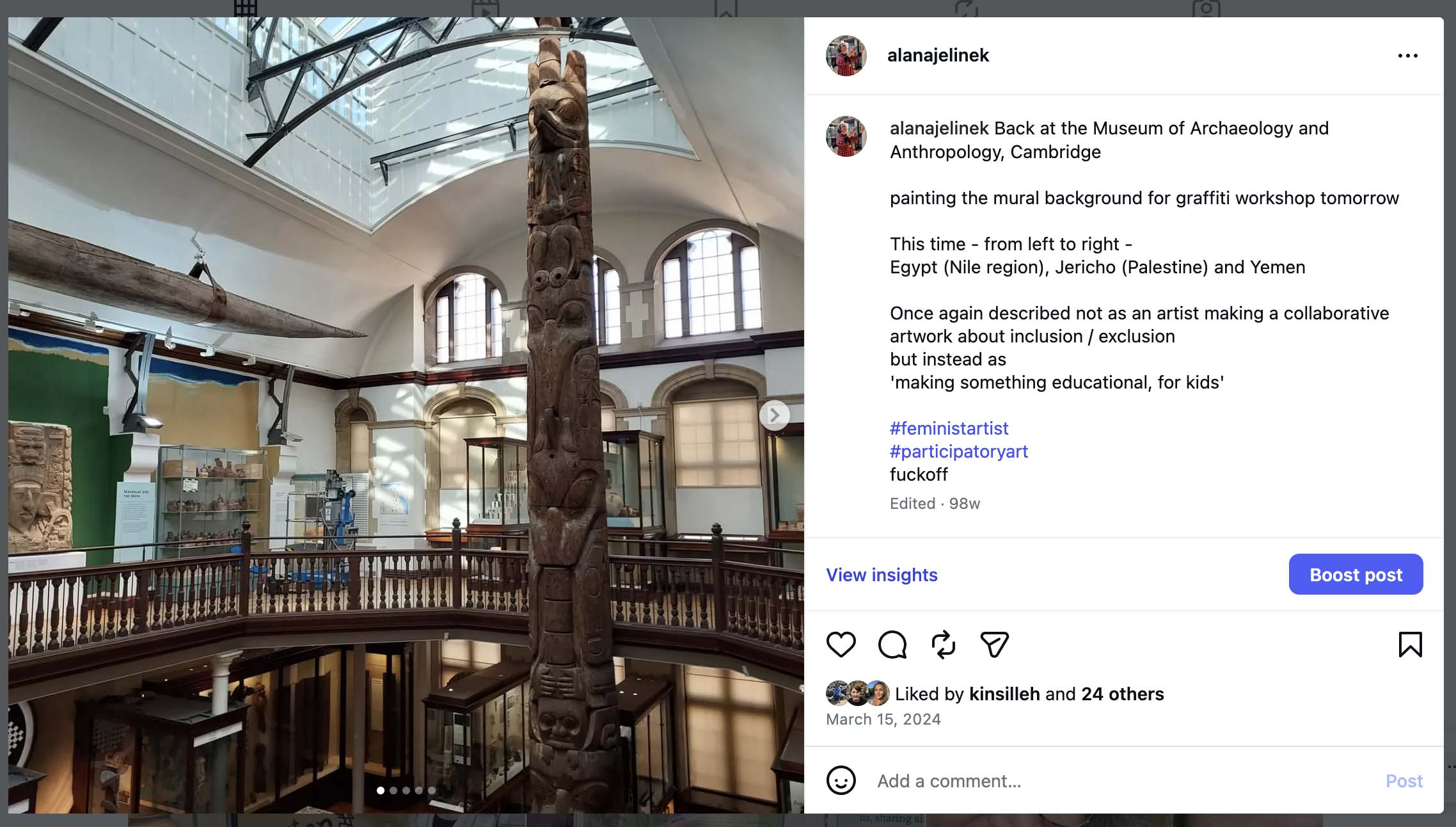
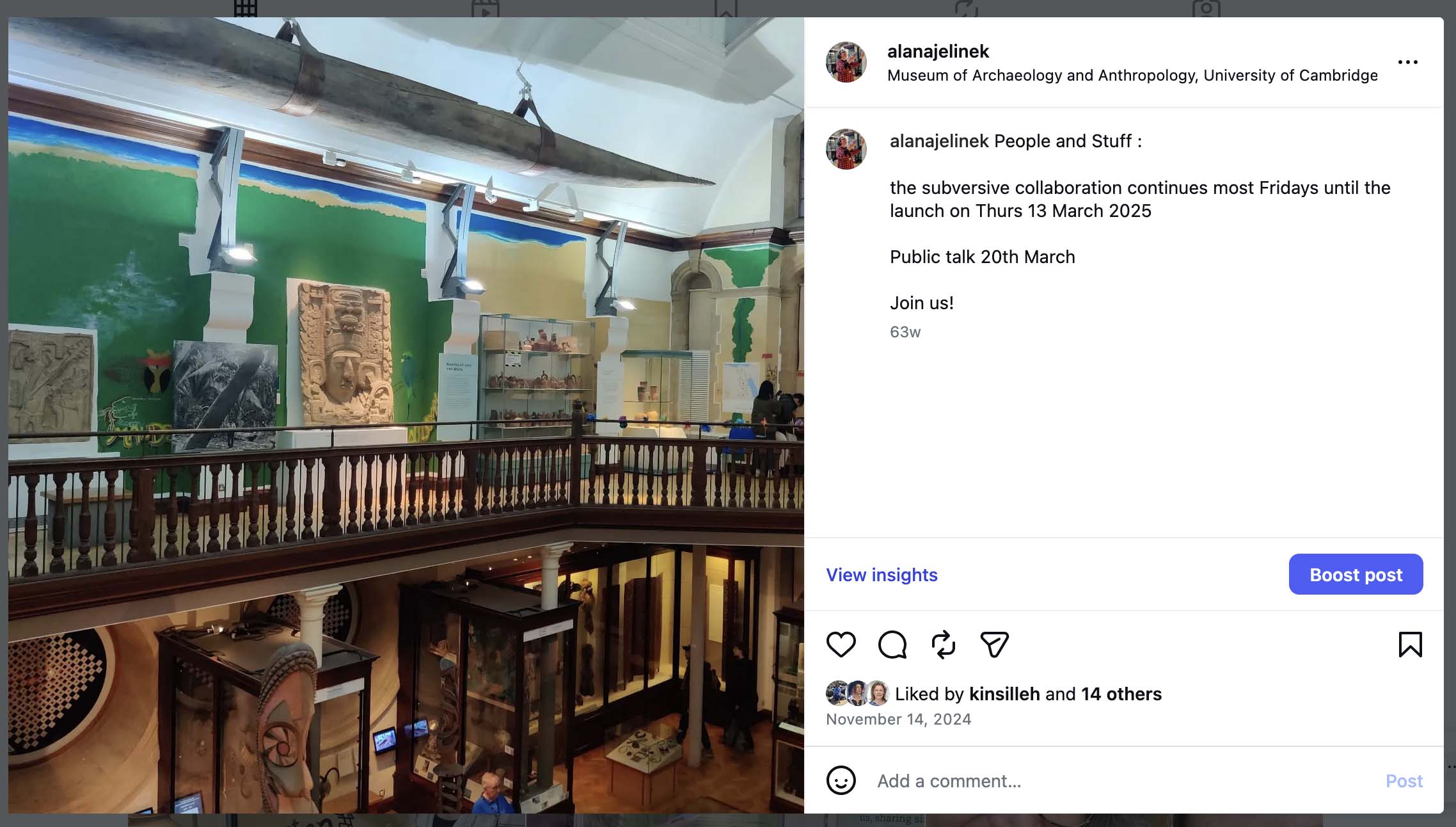
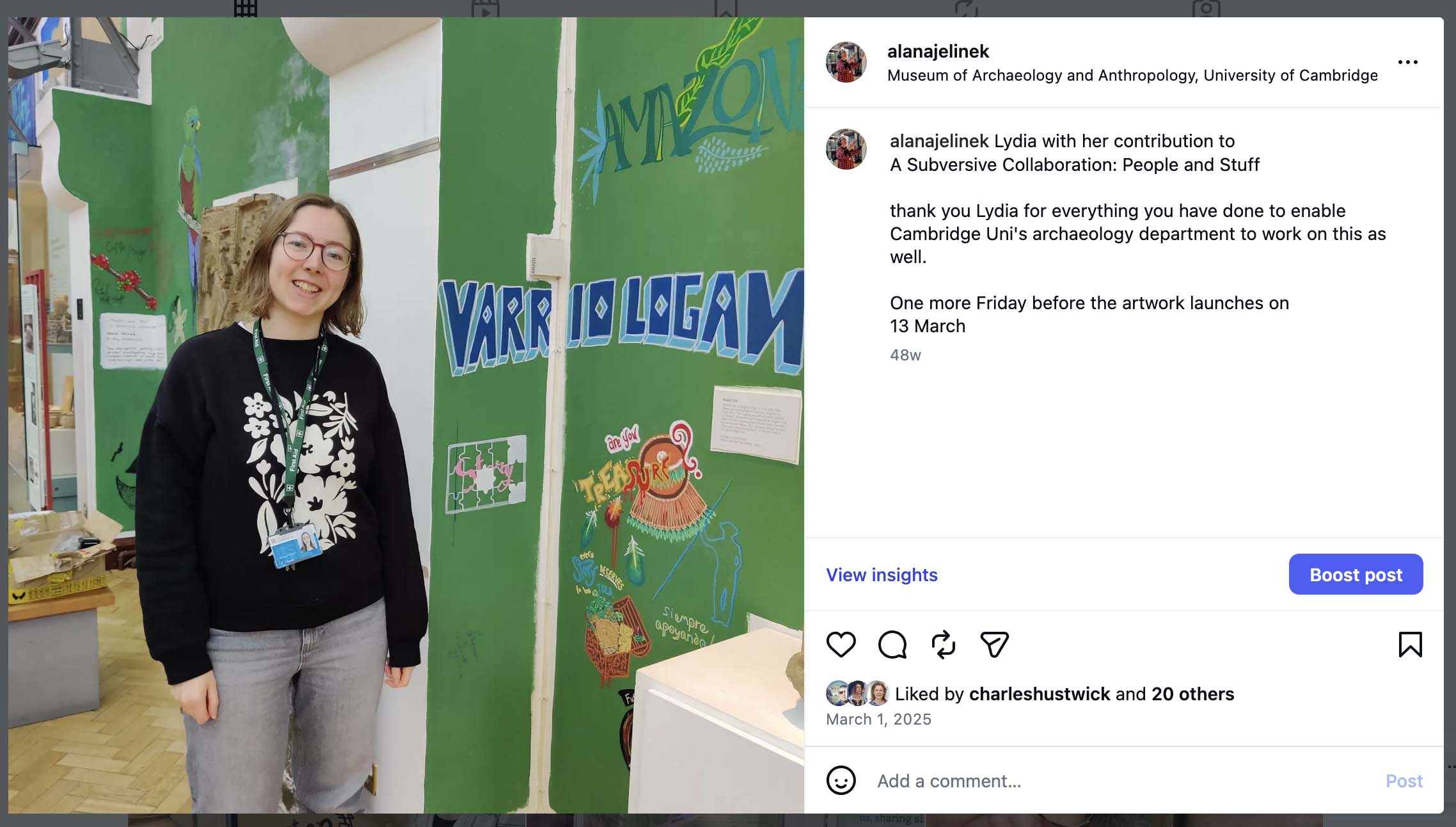
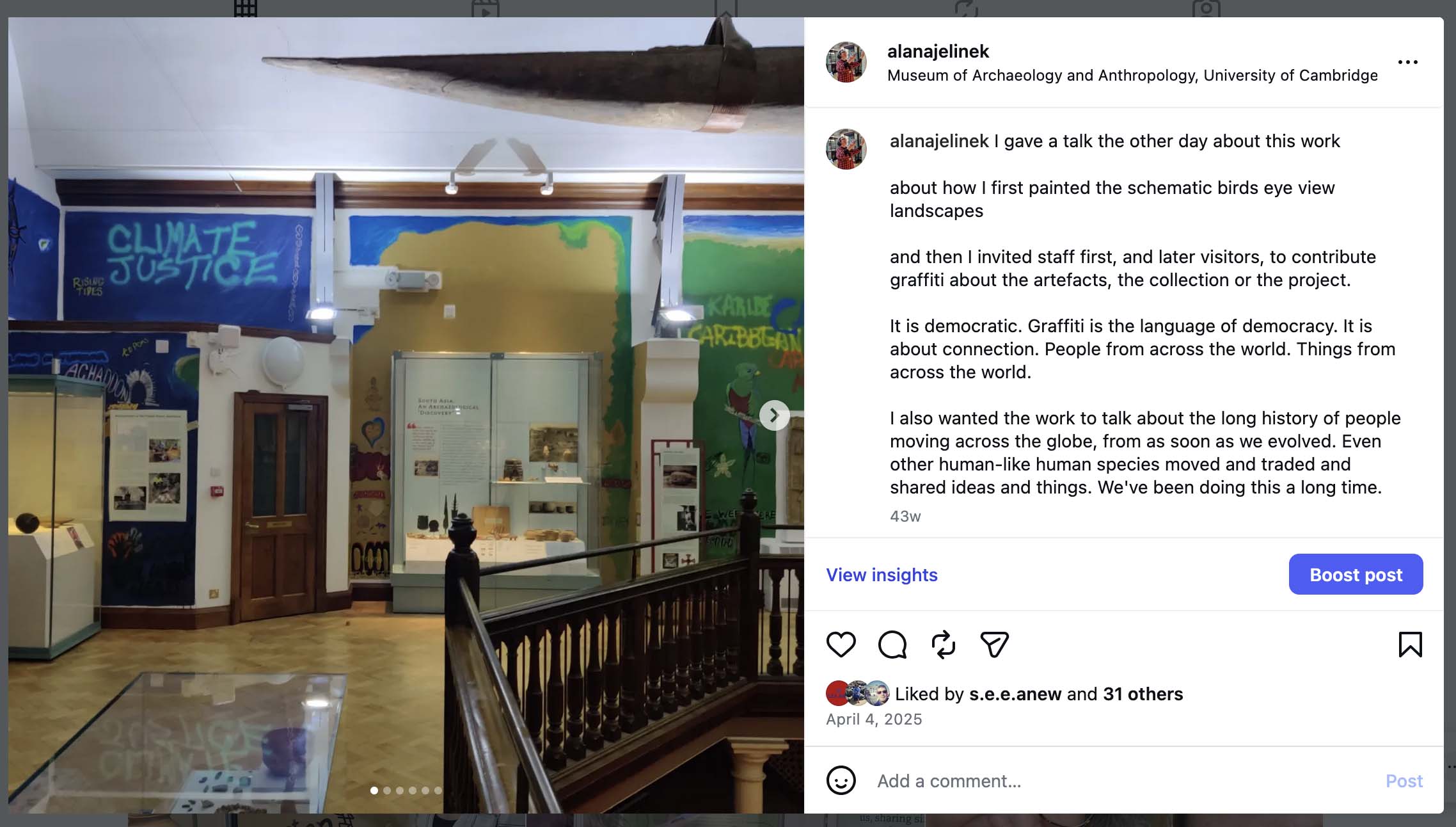
The artwork is part of the permanent display of the Andrews Gallery, where World Archaeology is on display at the Museum of Archaeology and Anthropology, University of Cambridge. It replaces the traditional white walls of museums.
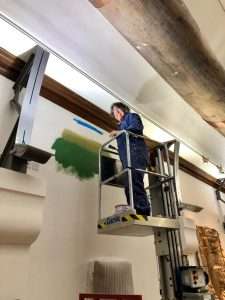
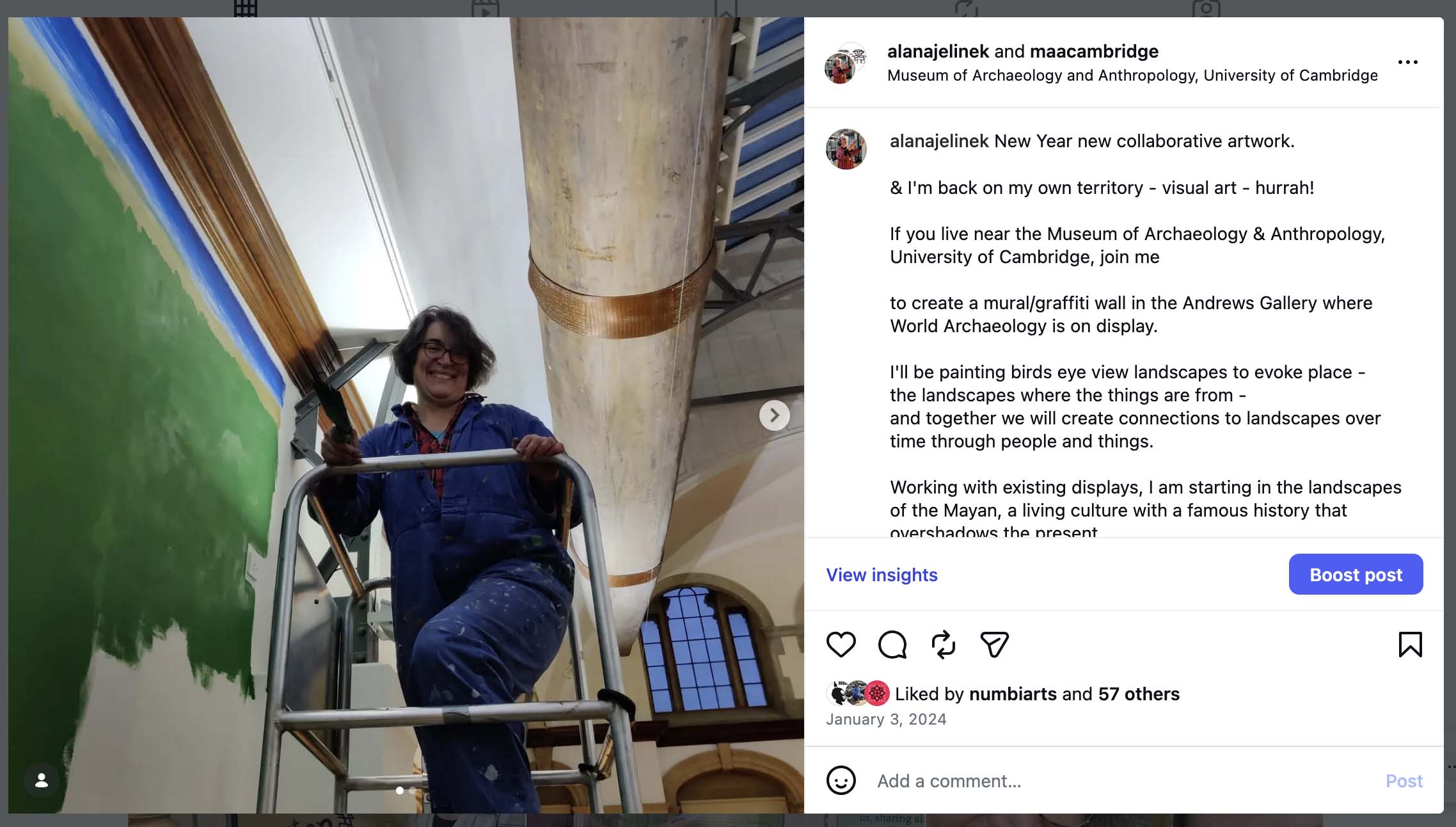
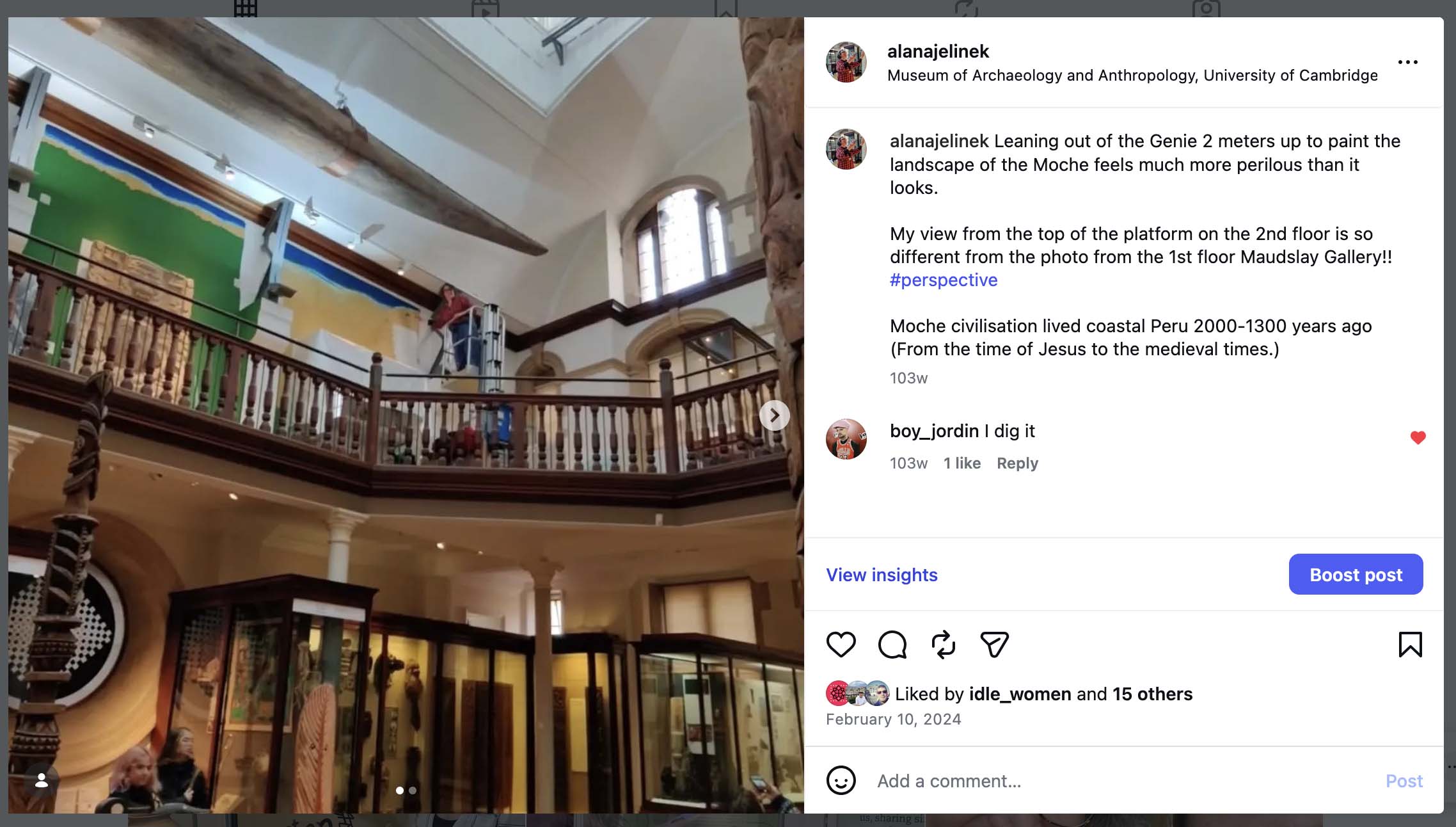
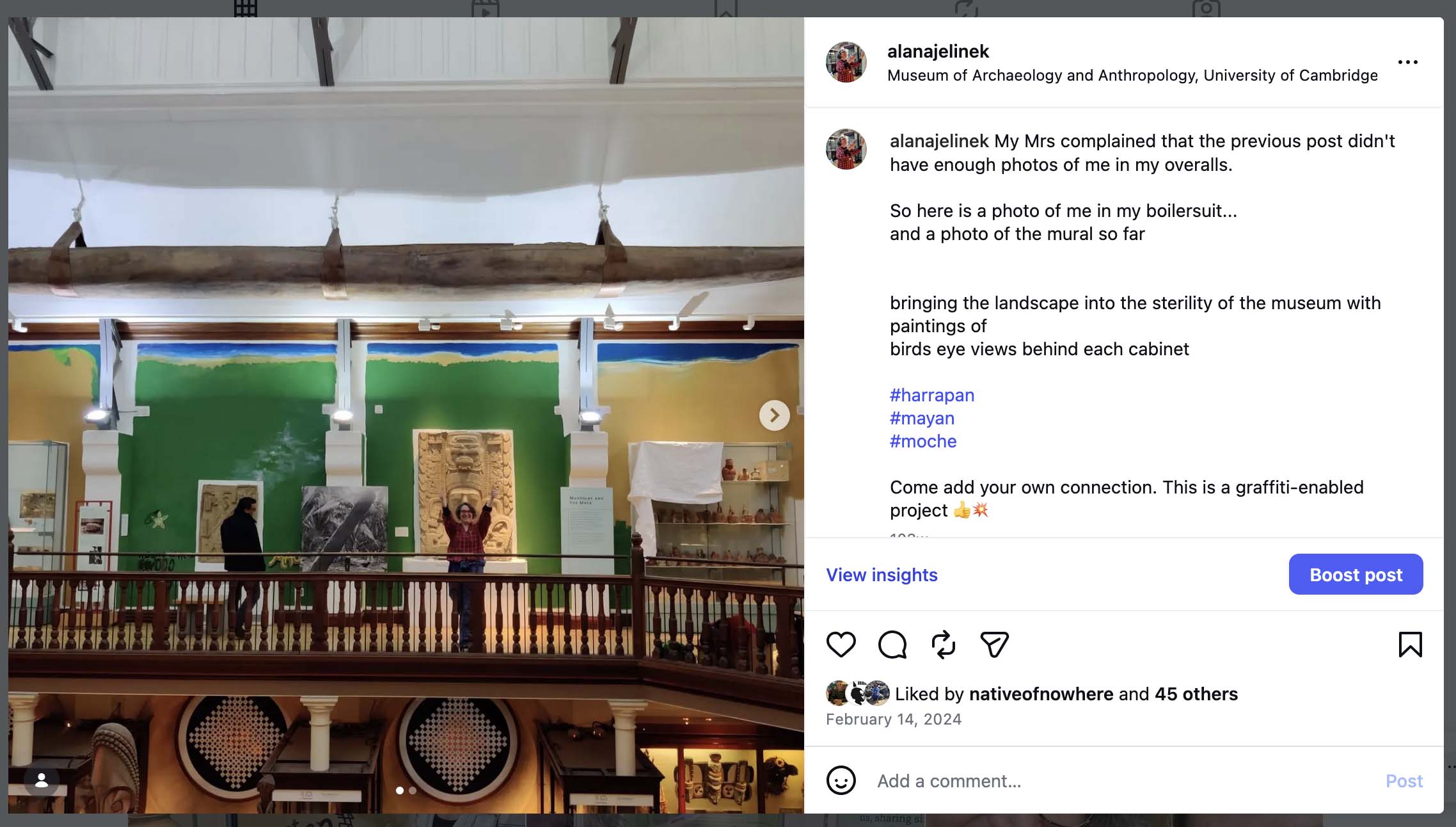
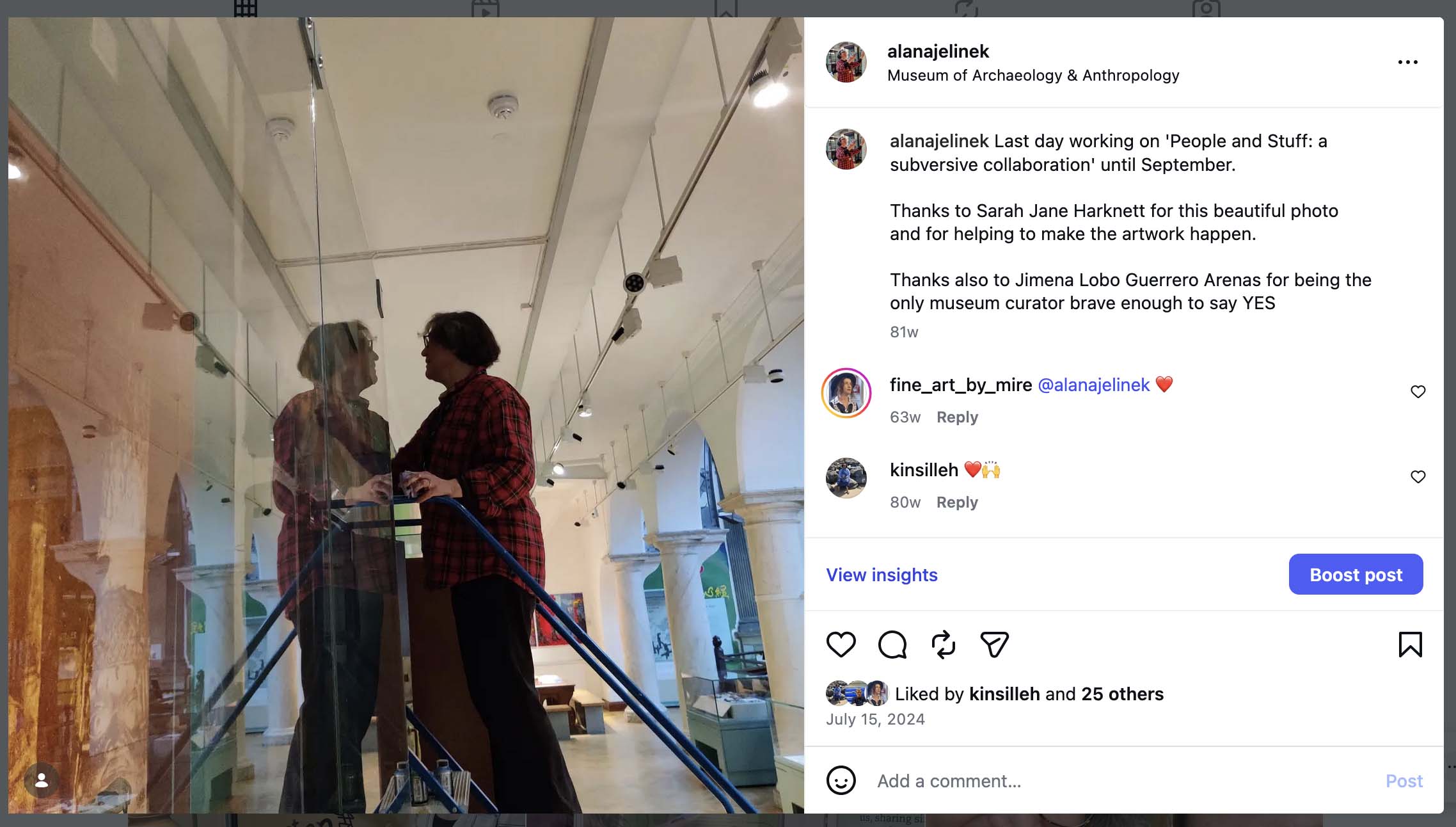
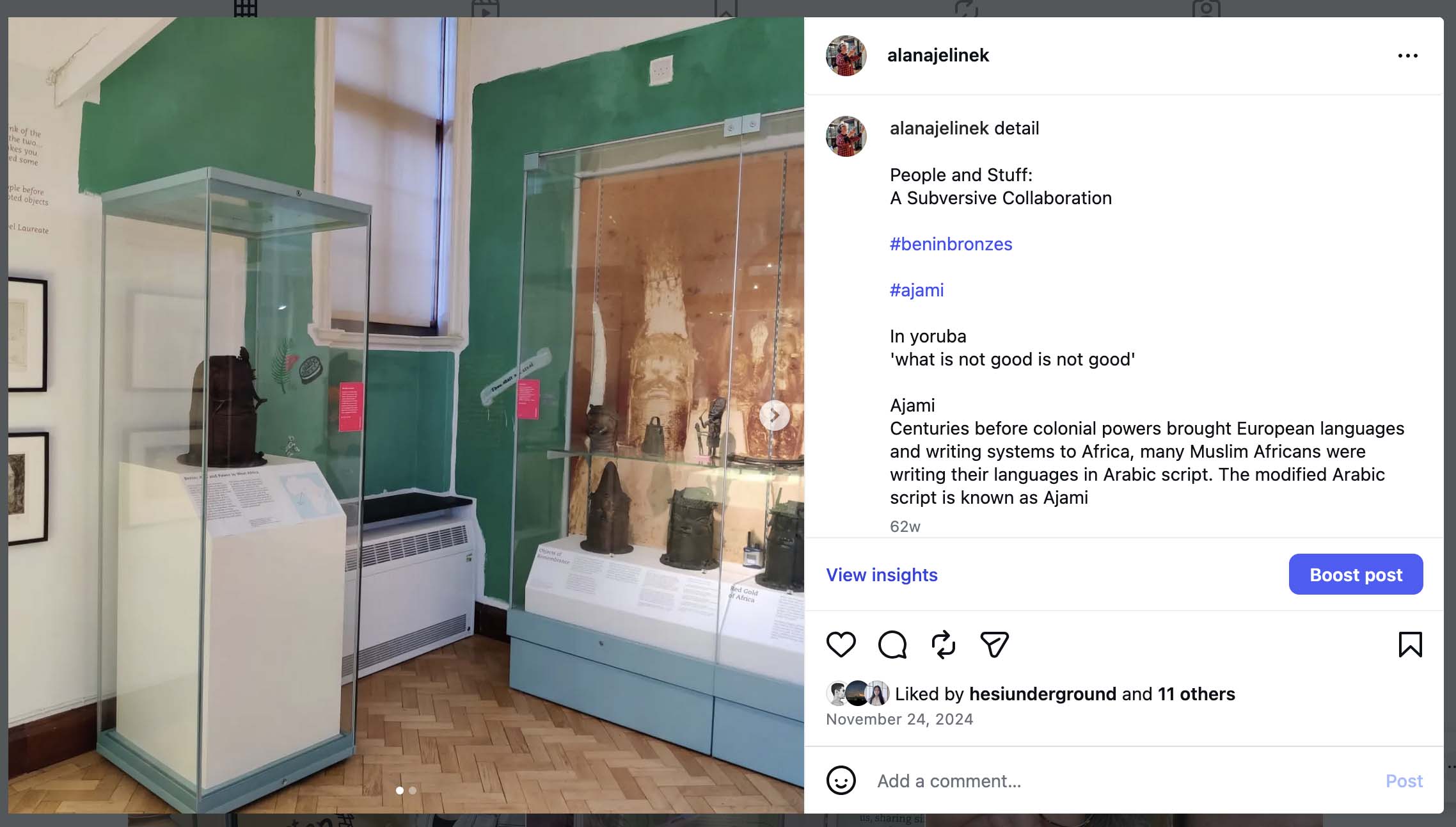
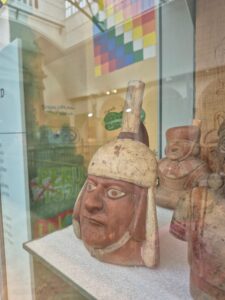
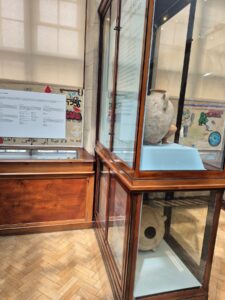
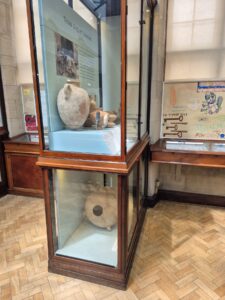
Like most museums before I made this intervention, the Andrews Gallery was all white walls and glass cabinets with a few objects too large for vitrines out on display. The white walls and glass made all the different objects from all over the world and from deepest time to the more recent past, look similar. The idea for this artwork was to try to make the walls active, to create a visual embodiment of connections and movement of people and our stuff across the globe.
‘People and Stuff: A Subversive Collaboration’ is both an artwork and an interdisciplinary research project with archaeologist and Senior Curator for World Archaeology, Dr Jimena Lobo Guerrero Arenas and Dr Sarah-Jane Harknett, Head of Education and Outreach. Co-written peer-reviewed papers are available via Researchgate.
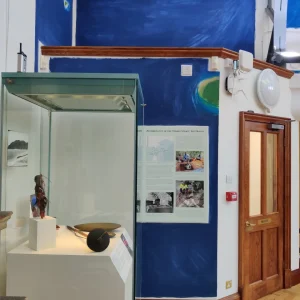
‘People and Stuff: A Subversive Collaboration’ builds on a history of institutional critique: artists like Fred Wilson, Coco Fusco and Sonia Boyce are my inspiration.
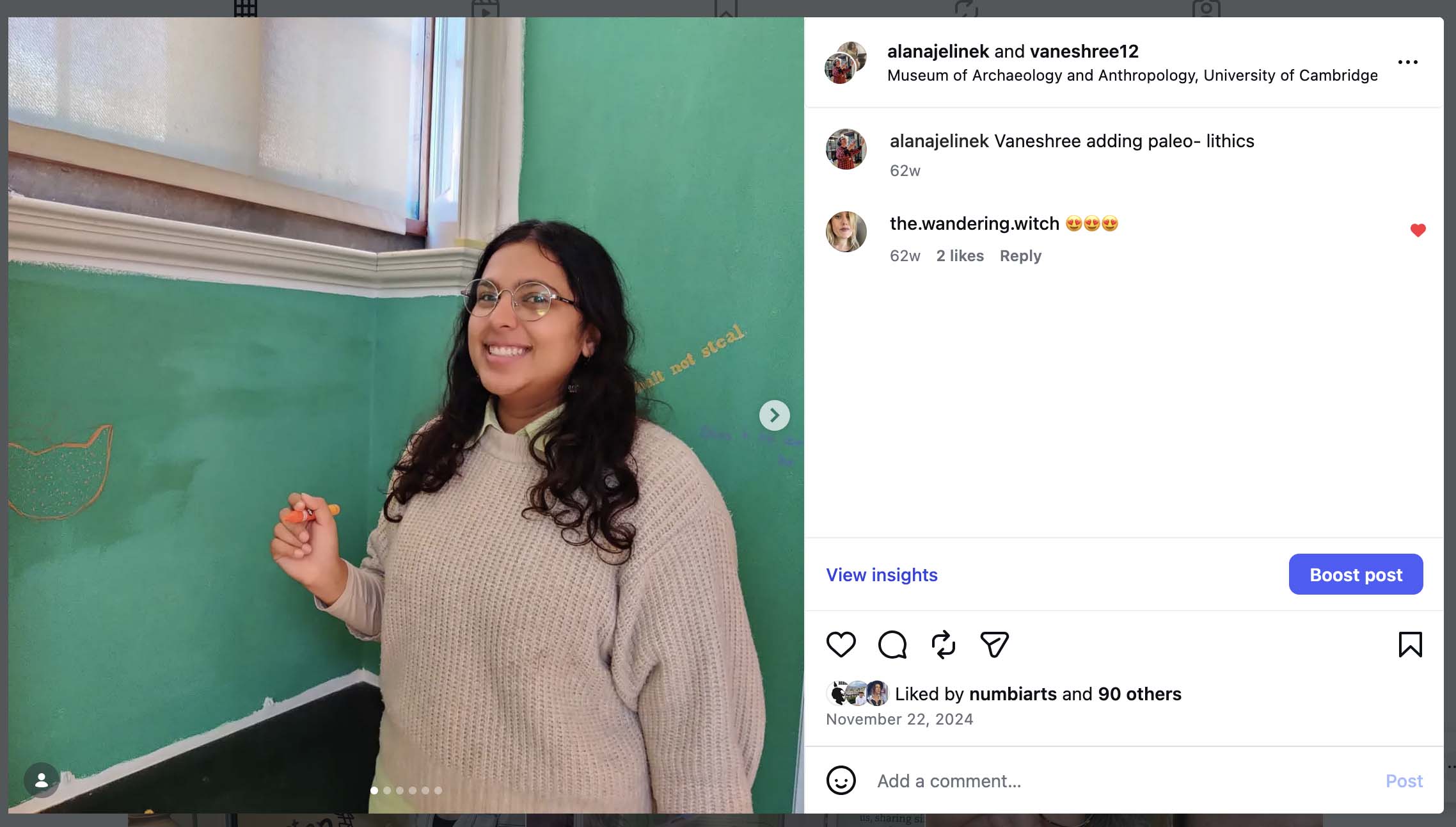
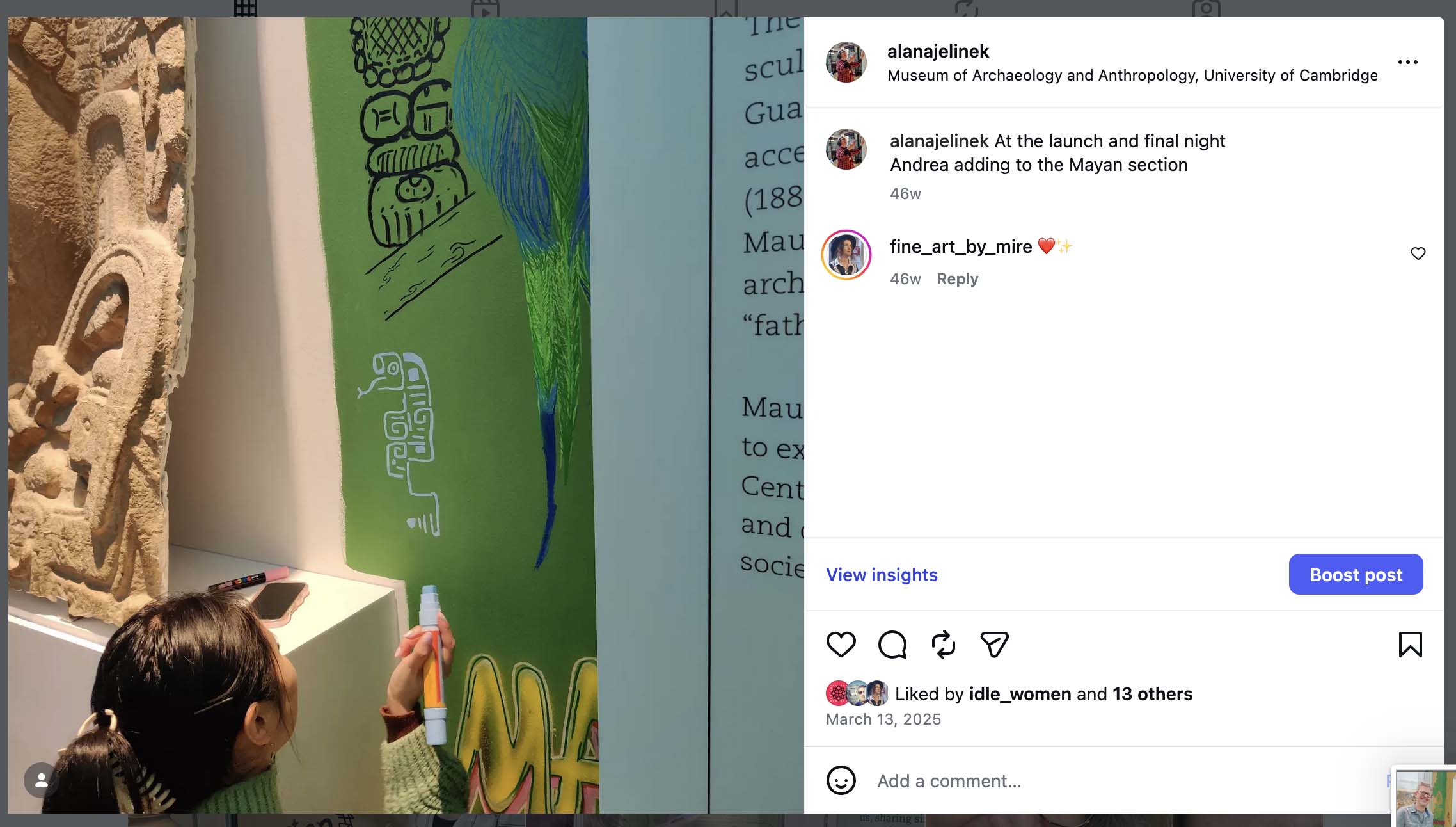
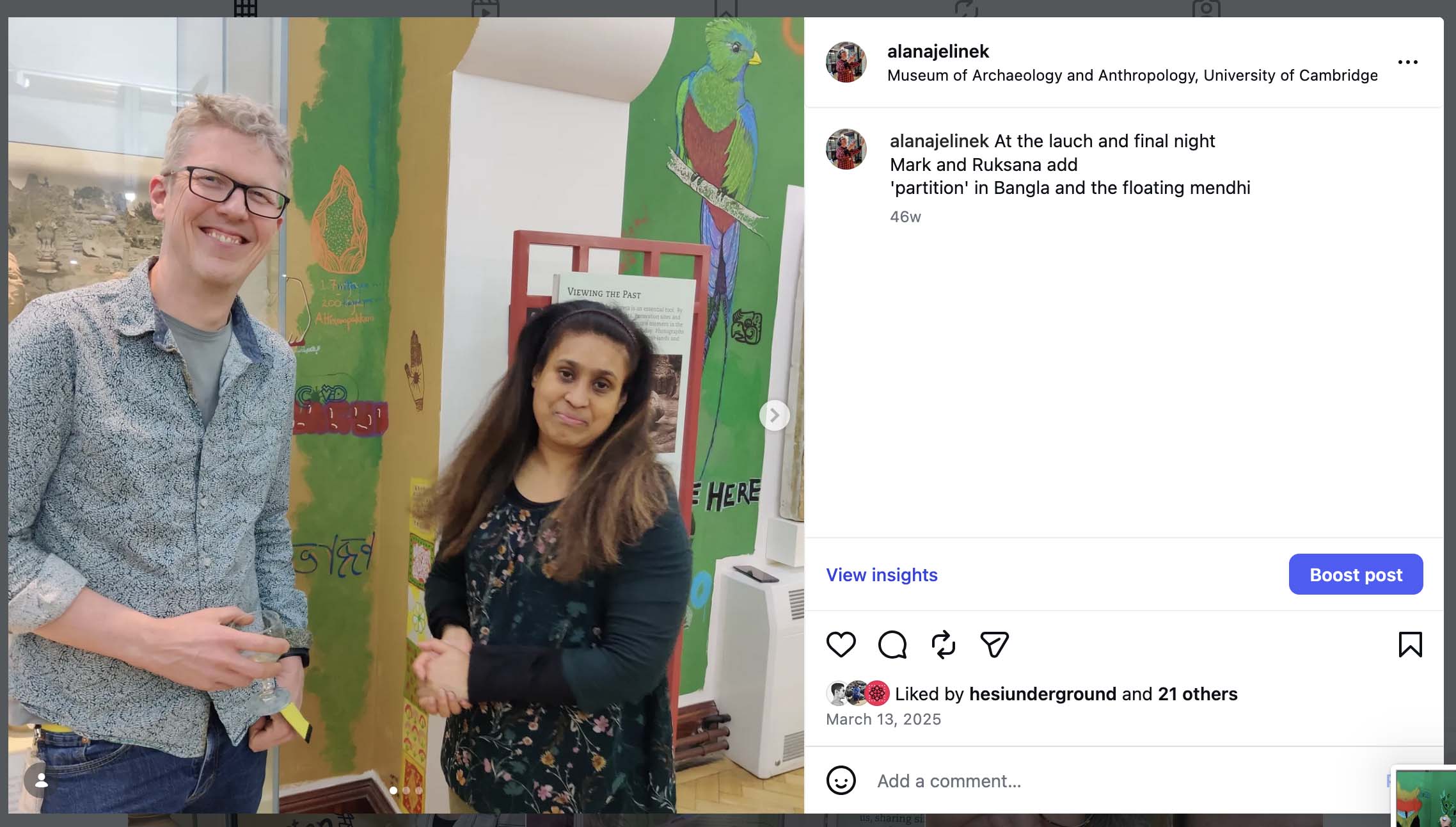
This site-specific intervention is widely collaborative and democratic – literally everyone is invited to contribute. No one voice, no one community, no specific politics is privileged. All are invited to participate. There is no censorship. This is about connection. Connections to the art and artefacts on display. Connections across place and time. It is a celebration of human diversity and the fact that people have migrated from place to place taking our things with us ever since humans evolved 330,000 years ago (or 2million depending on your view).
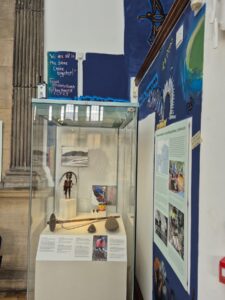
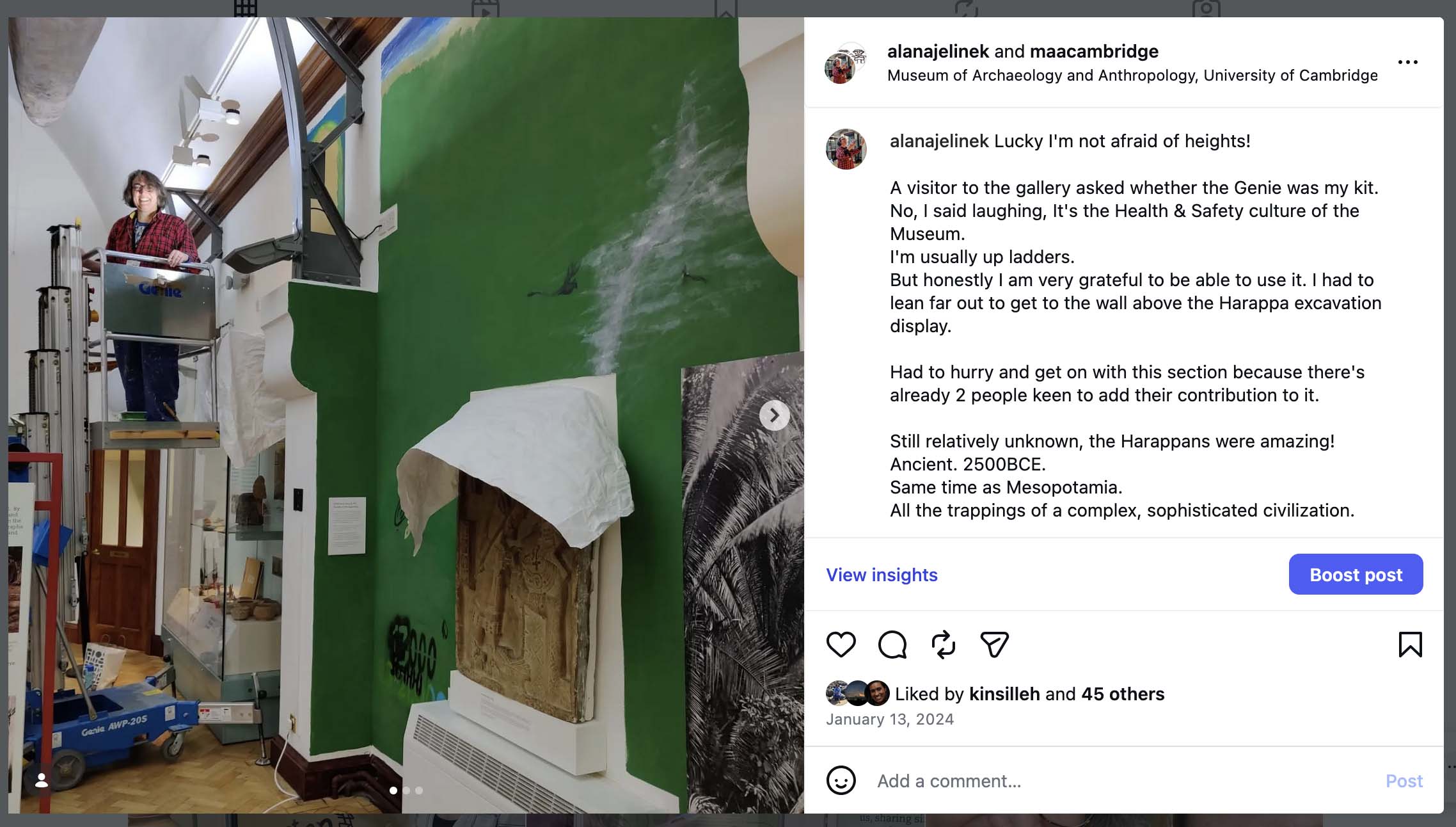
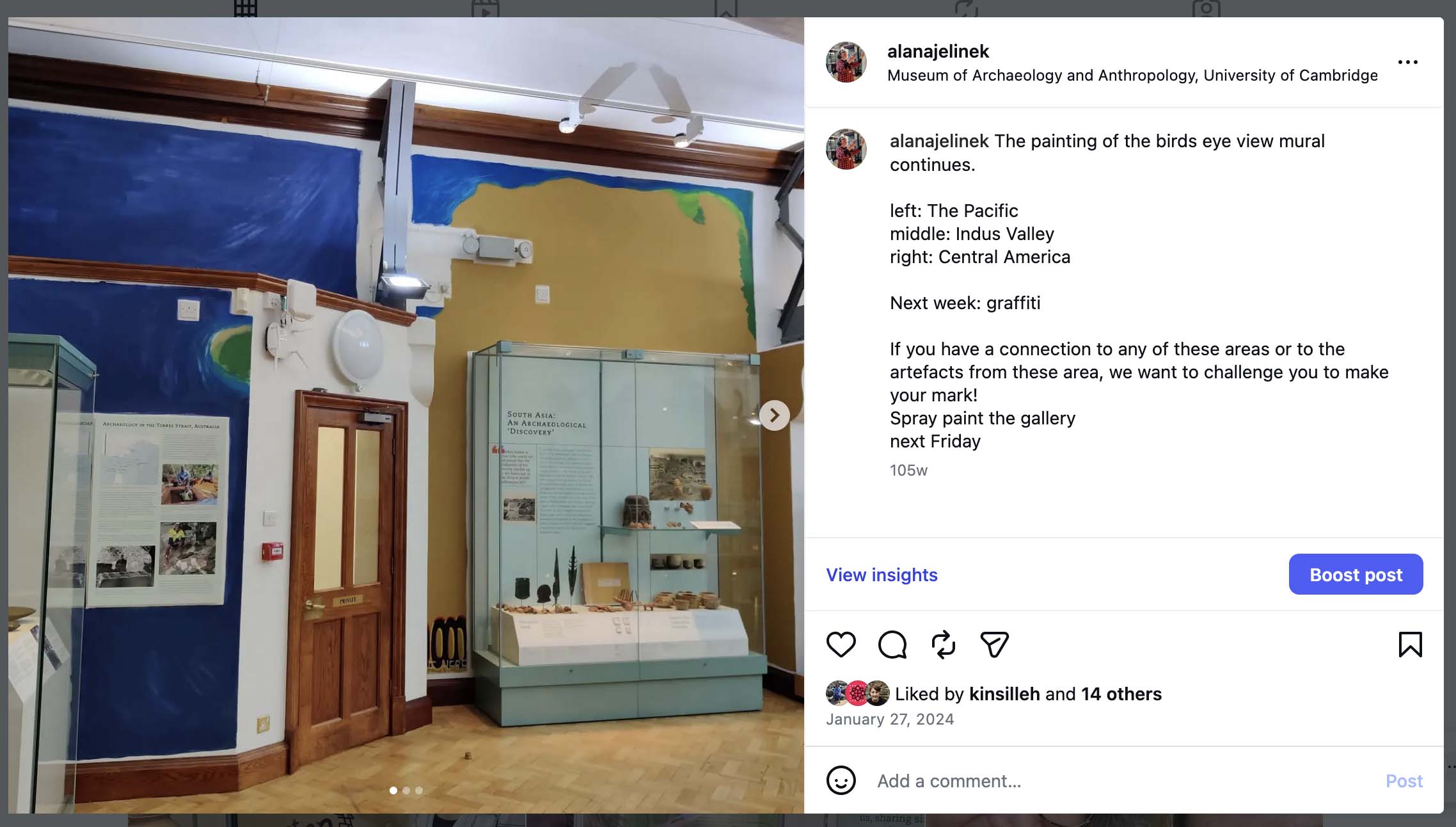
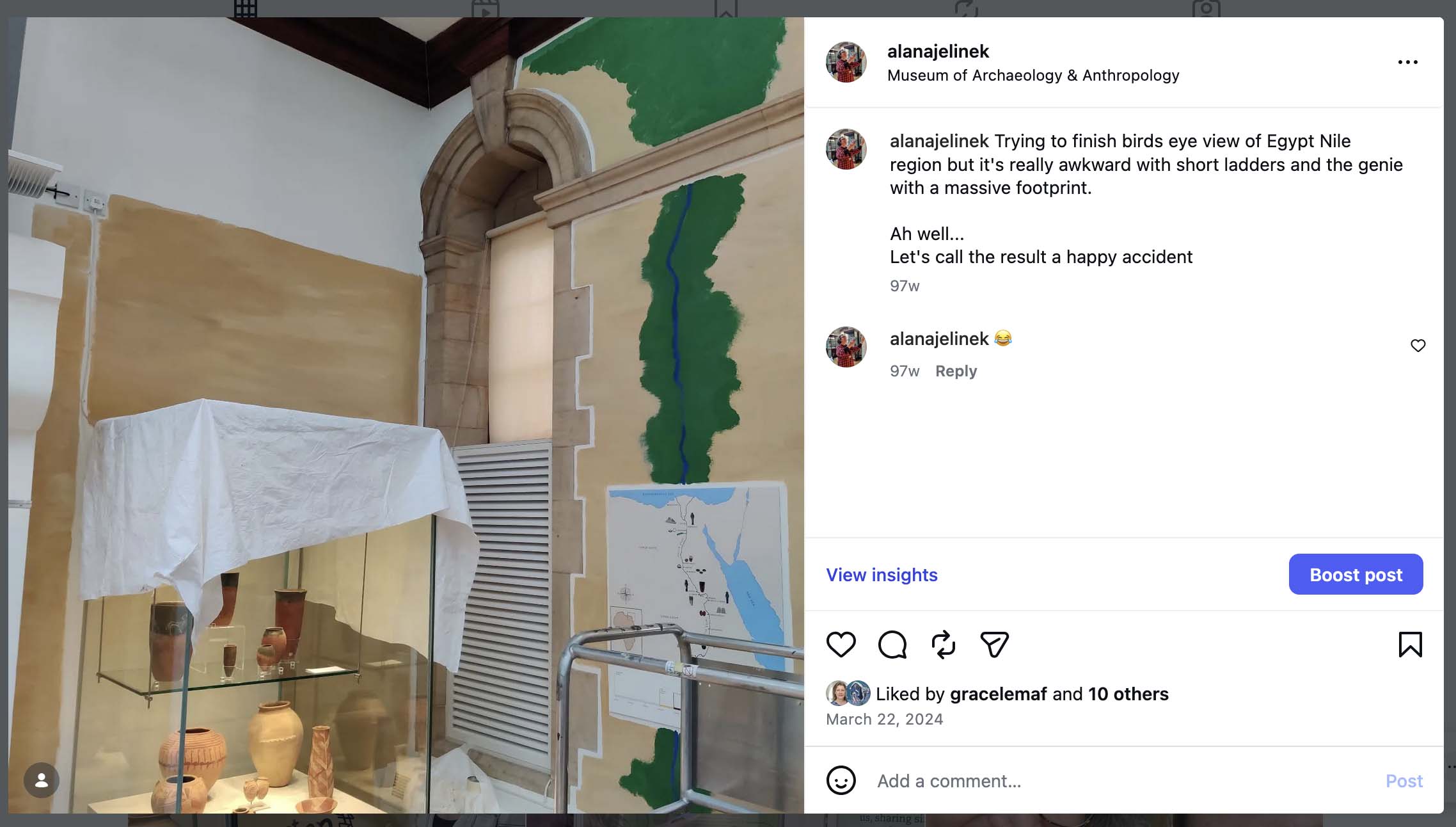
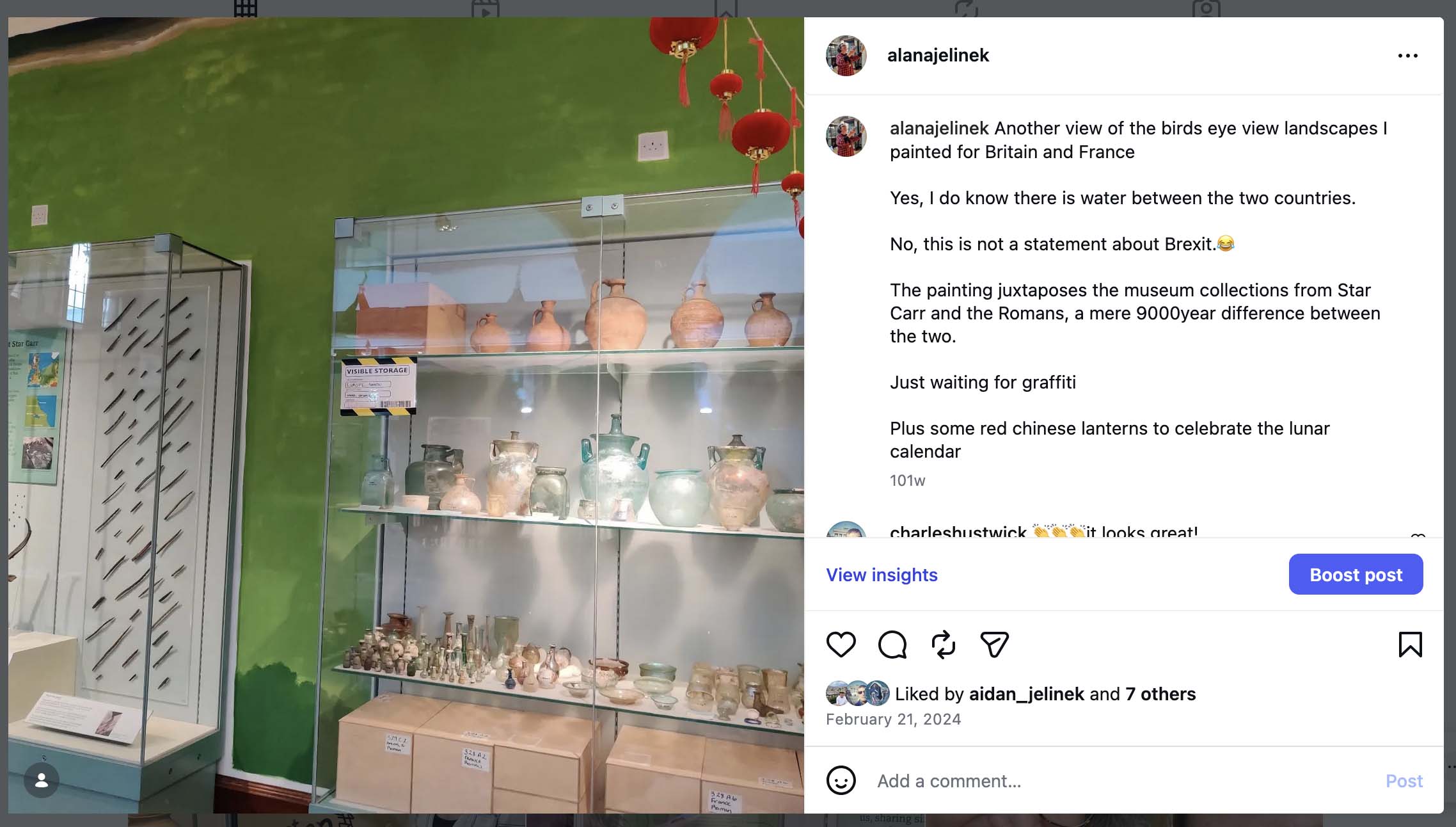
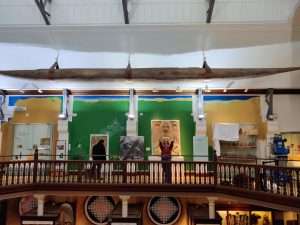
The artwork began with me painting schematic birds eye view landscapes. I have been using birds eye views to explore the politics of landscape and nation since 2000 (eg Europe the Game 2002-ongoing). For this artwork, I used a schematic approach because I wanted to evoke a sense of place, not literally represent it. The work is across the 4 sides of the gallery and is approximately 3m x 50m.
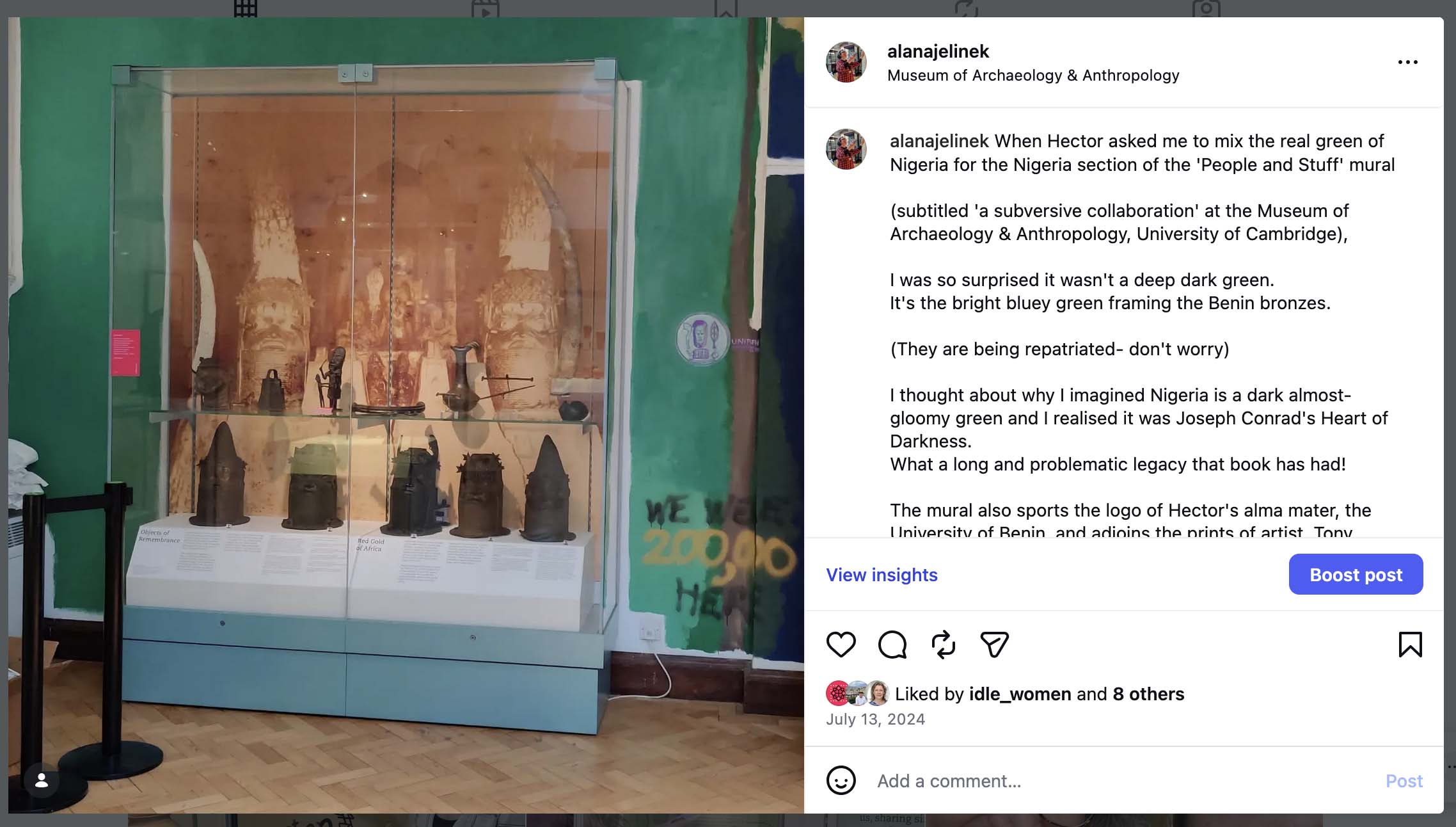
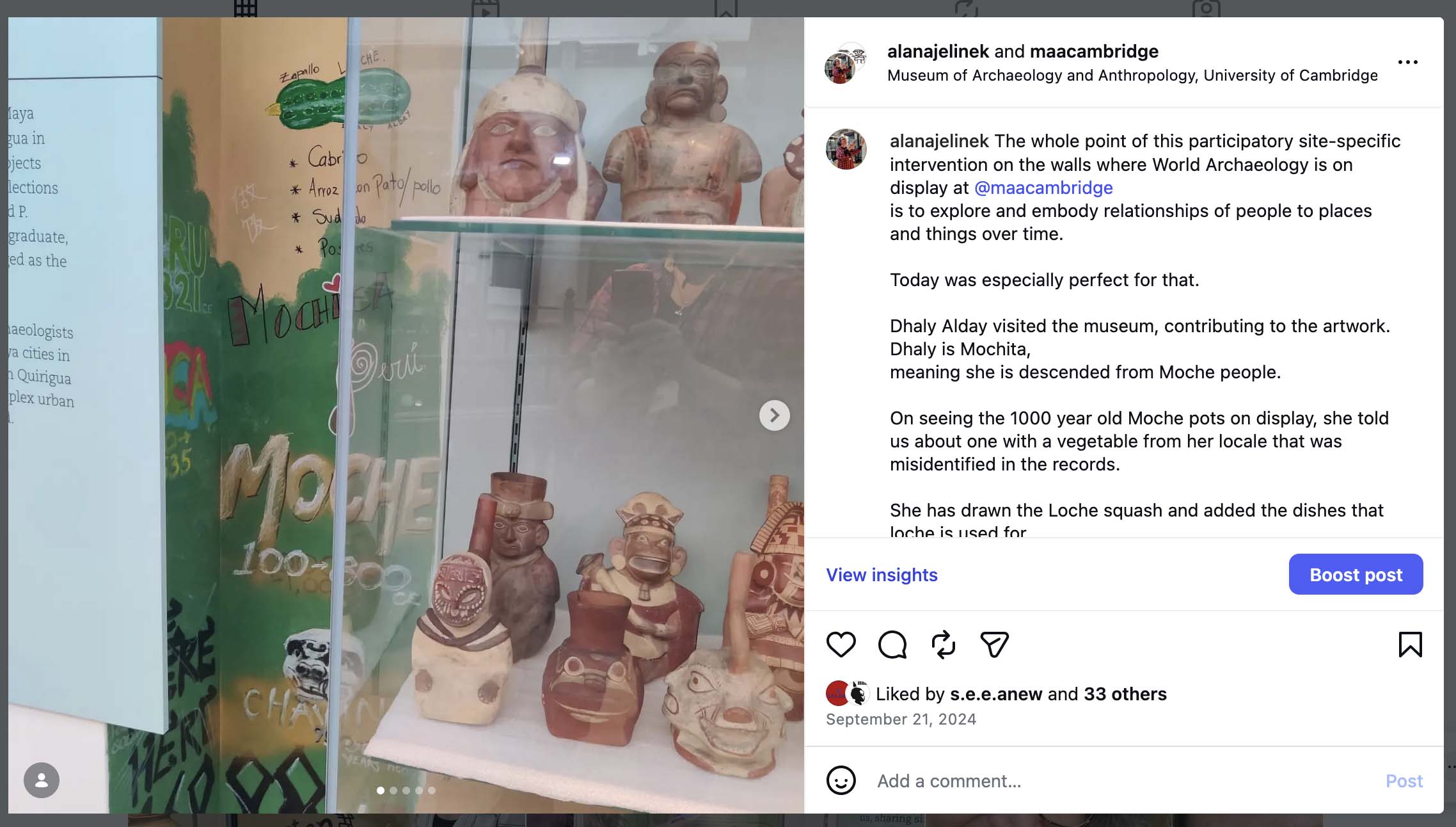
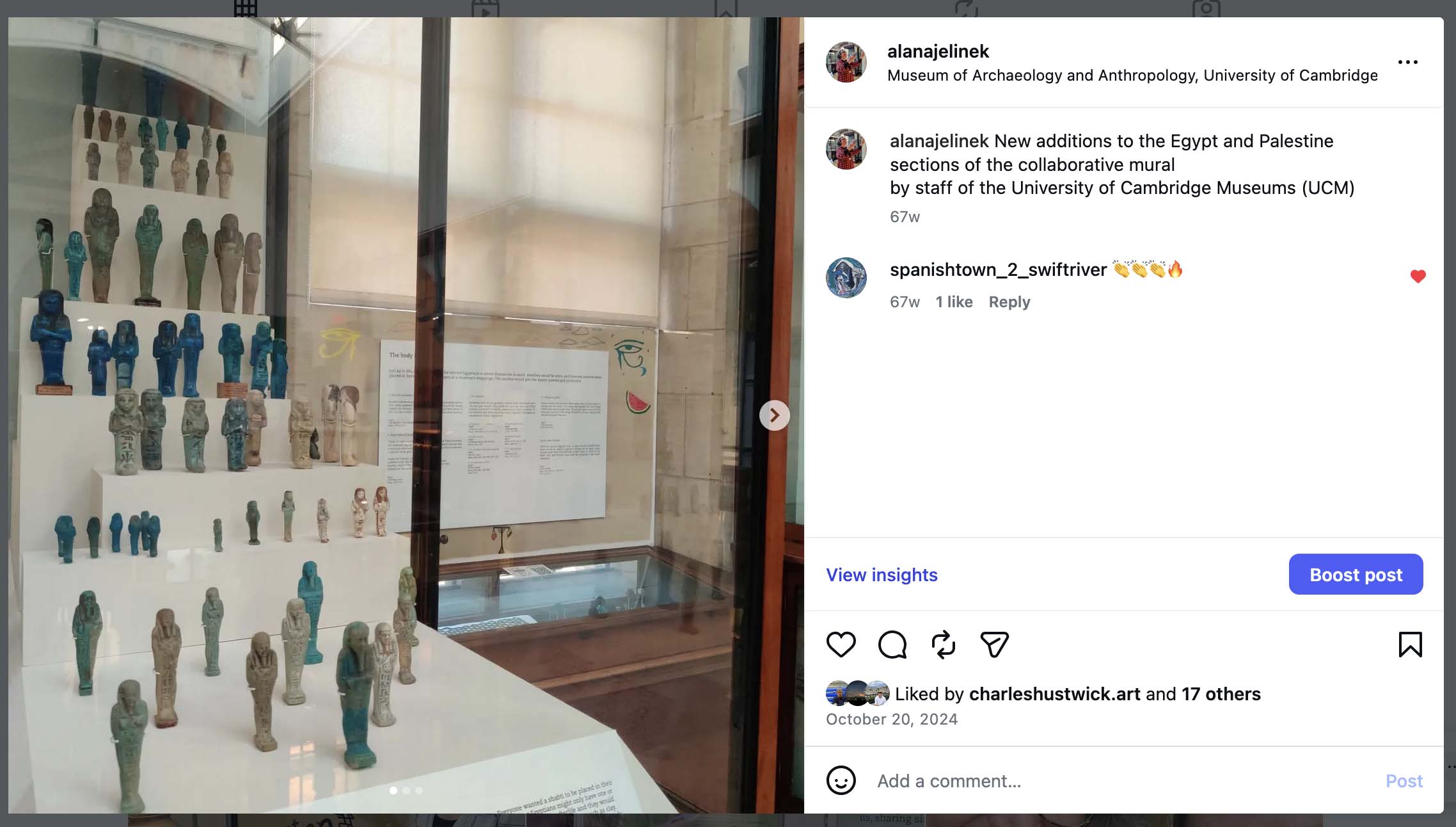
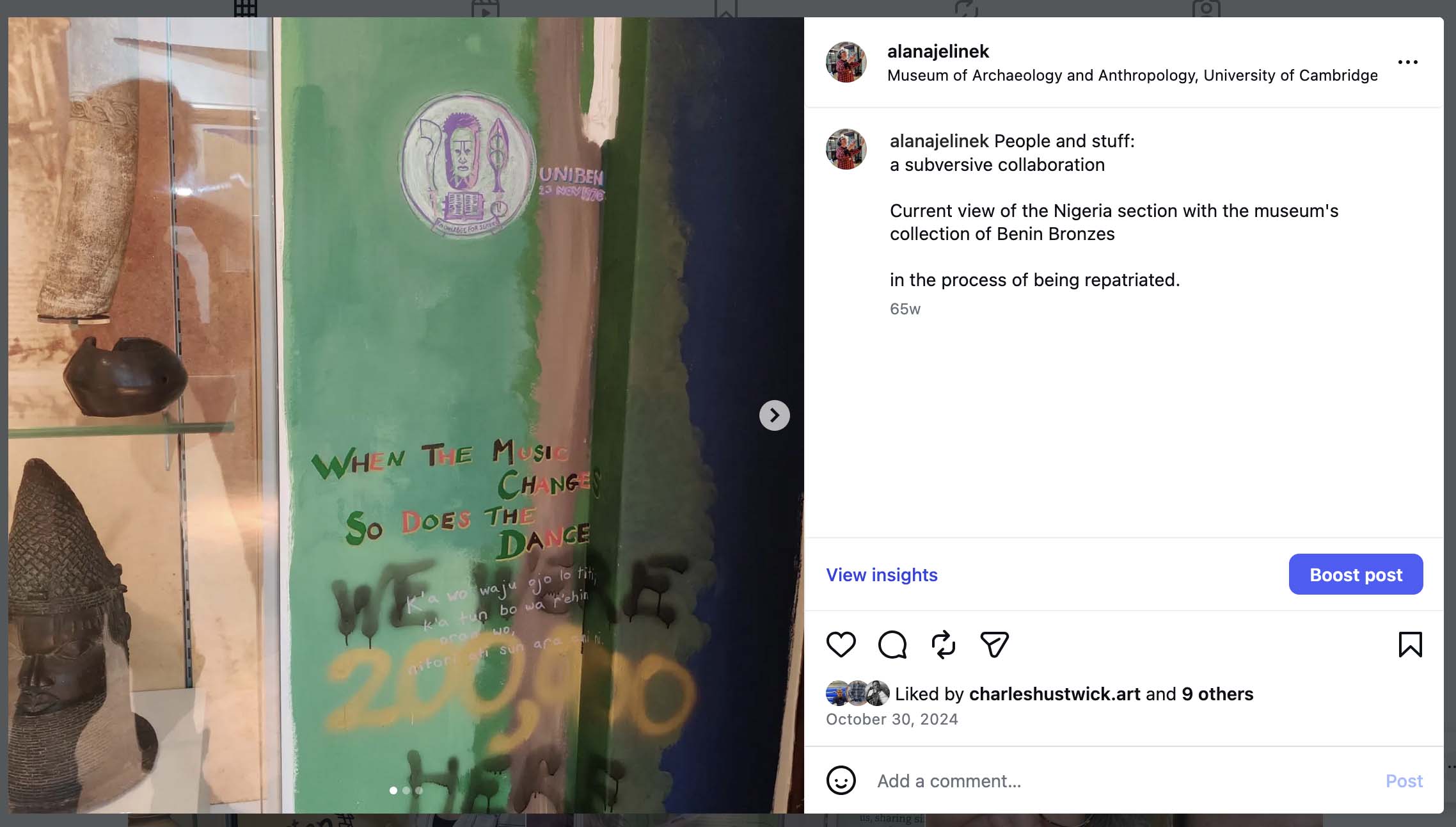
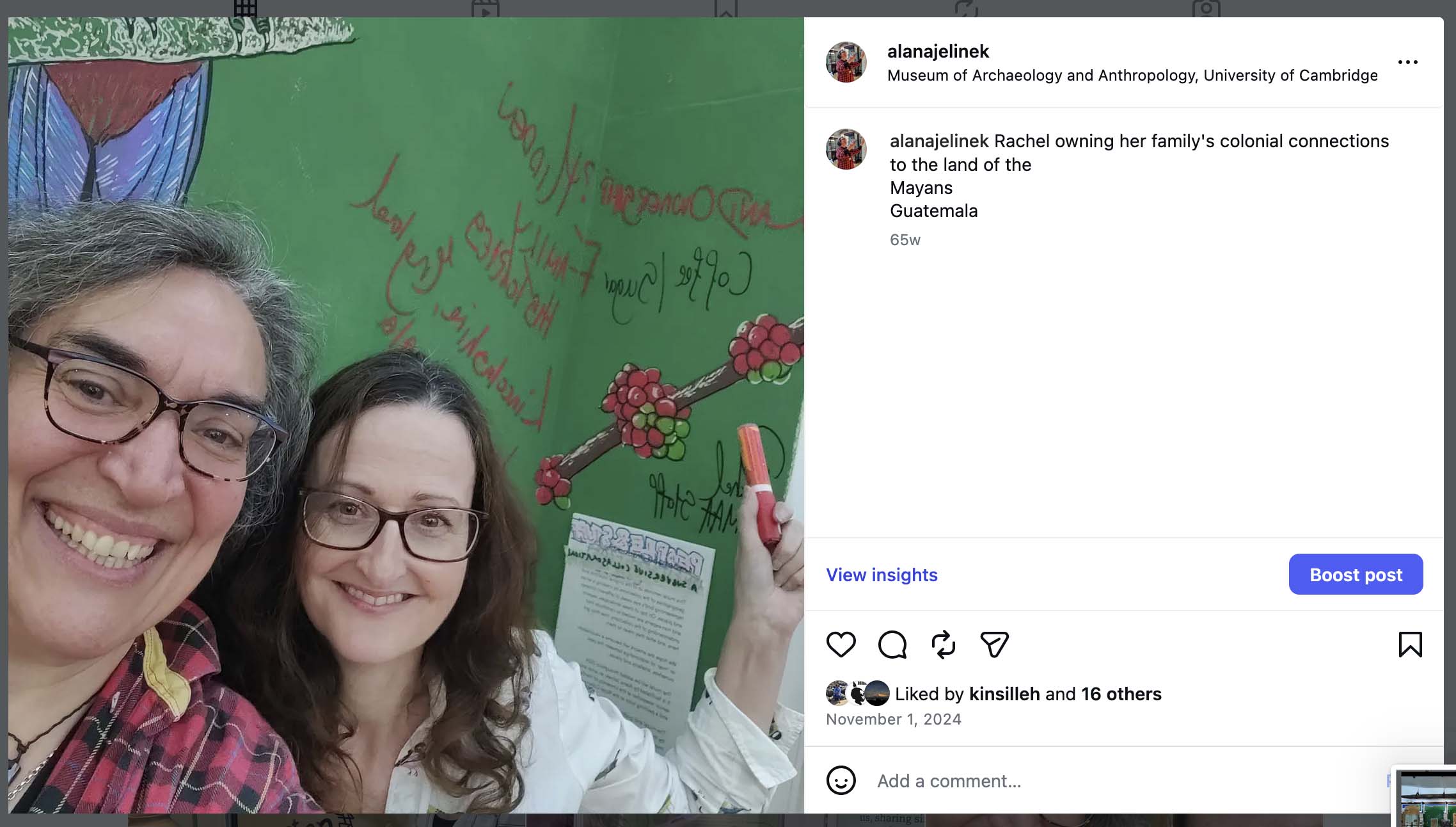
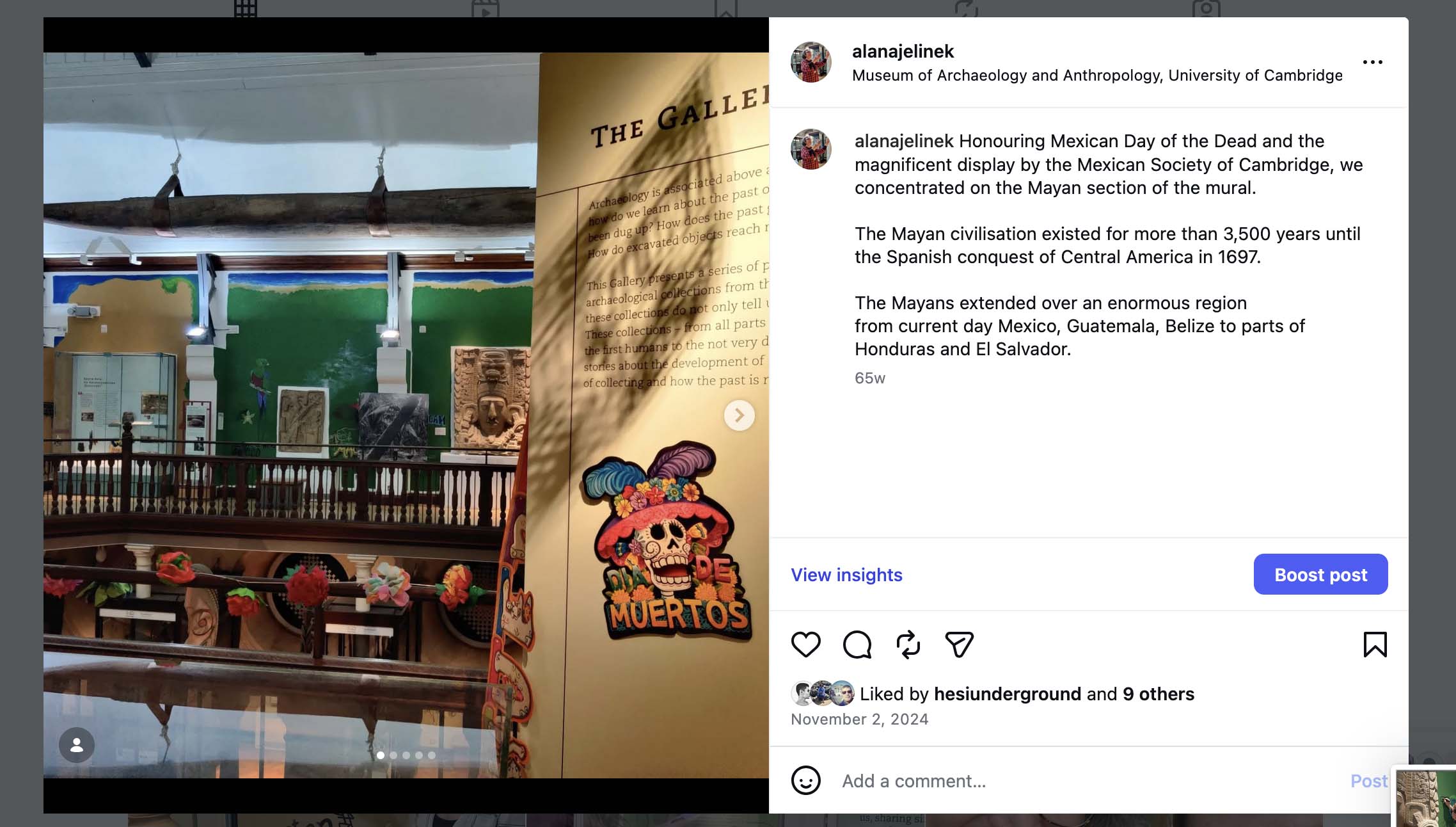
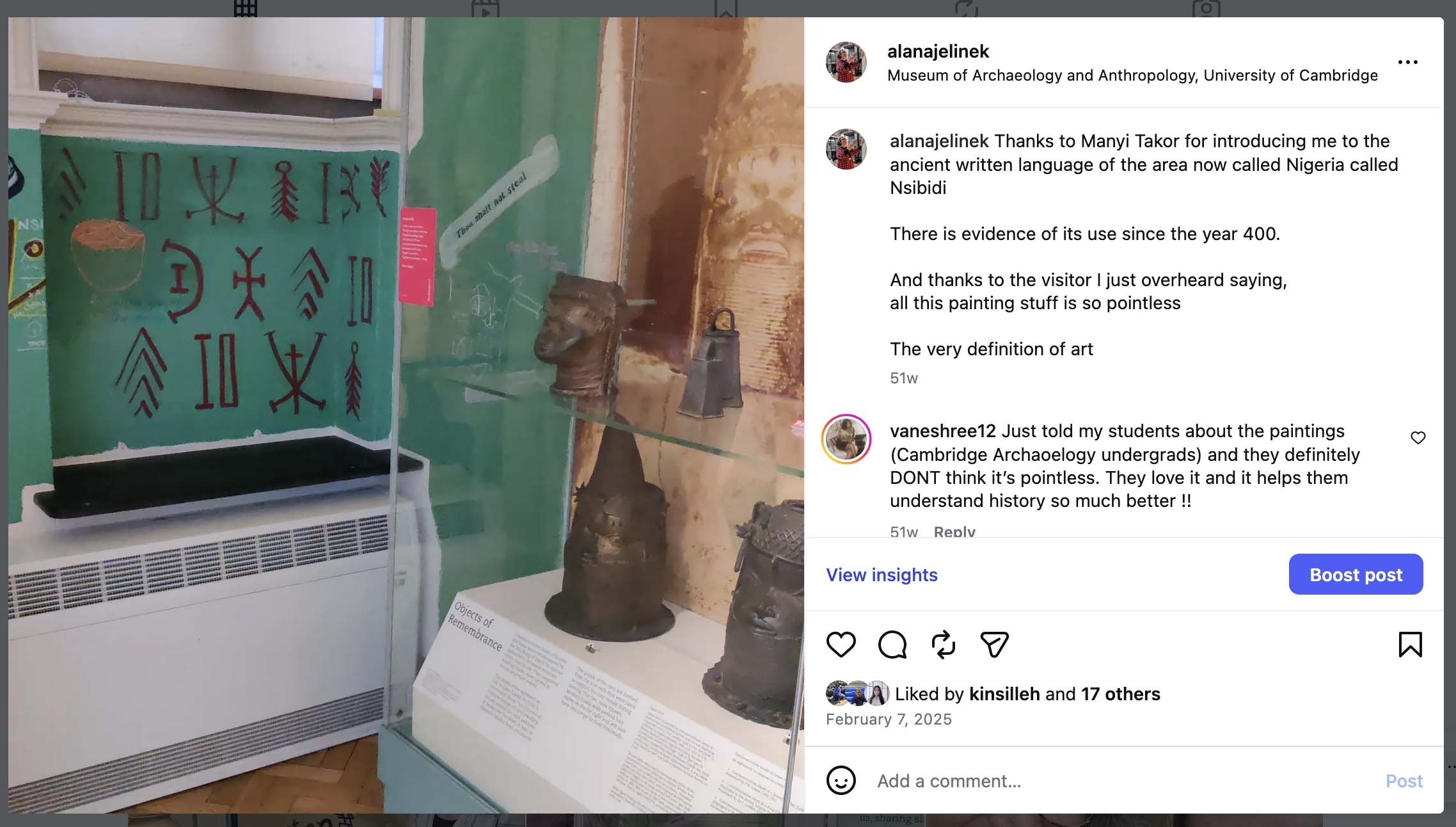
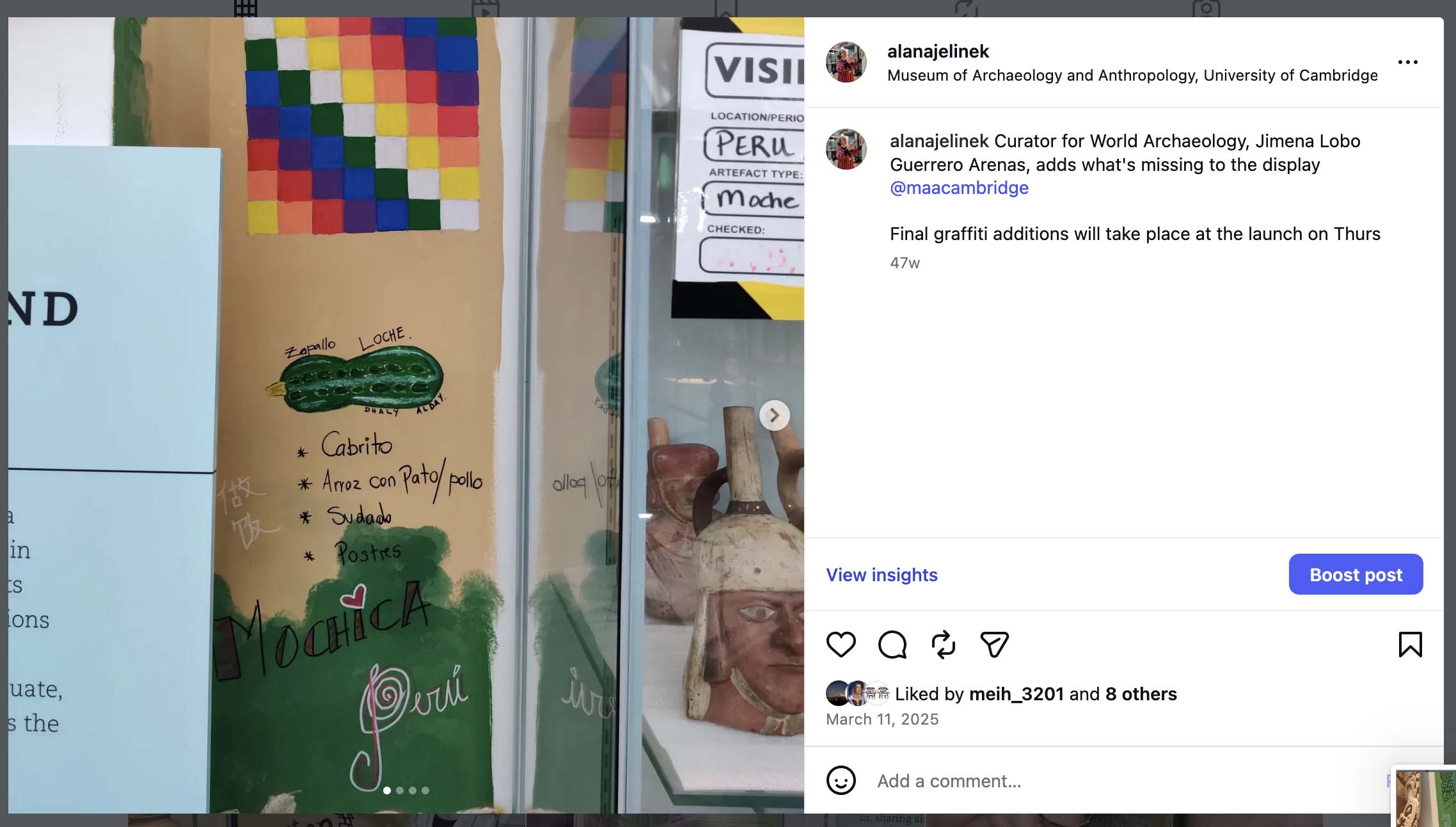
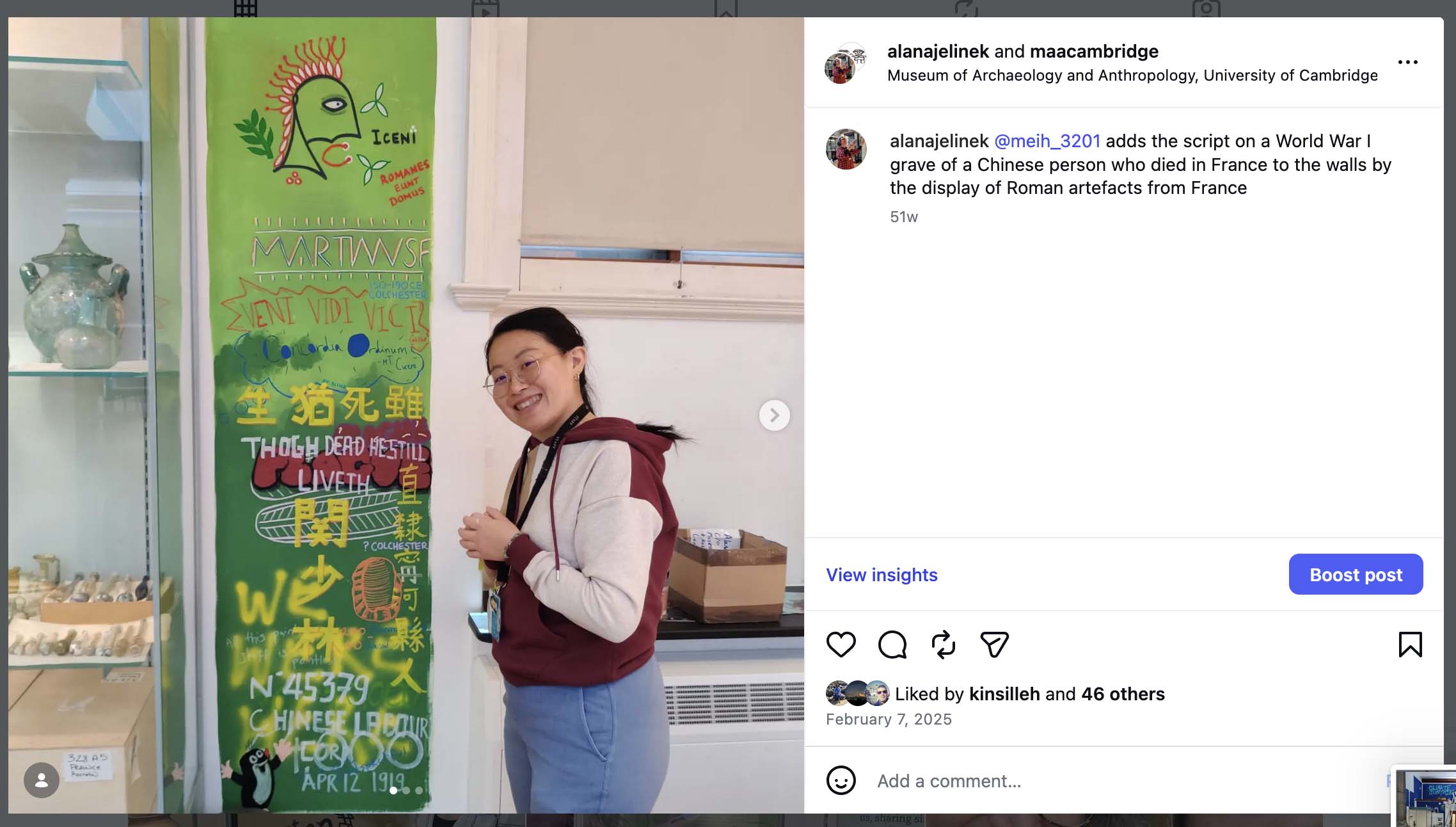
Landscapes evoke the places where the objects come from: the Yellow River in China, the Pacific region around Torres Strait (between Australia and New Guinea), the Indus Valley in Pakistan, Mexico-Guatamala-Nicaragua-Costa Rica area of the Mayans, the northern Peruvian desert, the Nile Valley of Egypt, Jericho, Northern Iran/Persia, Yemen, the site where the Benin bronzes and other artefacts were looted in a punitive war in Nigeria, Britain and western Europe (the area of the Romans).
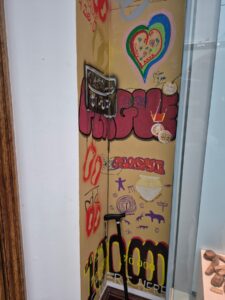
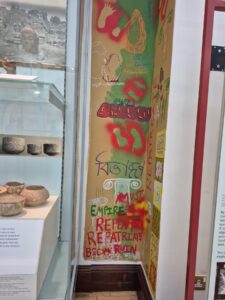
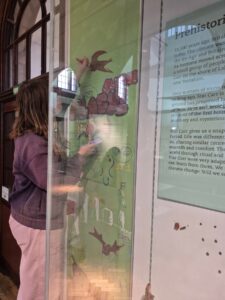
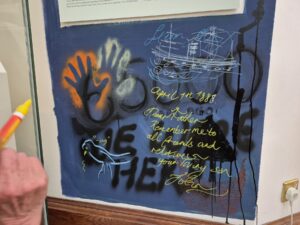

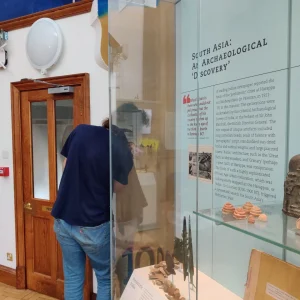
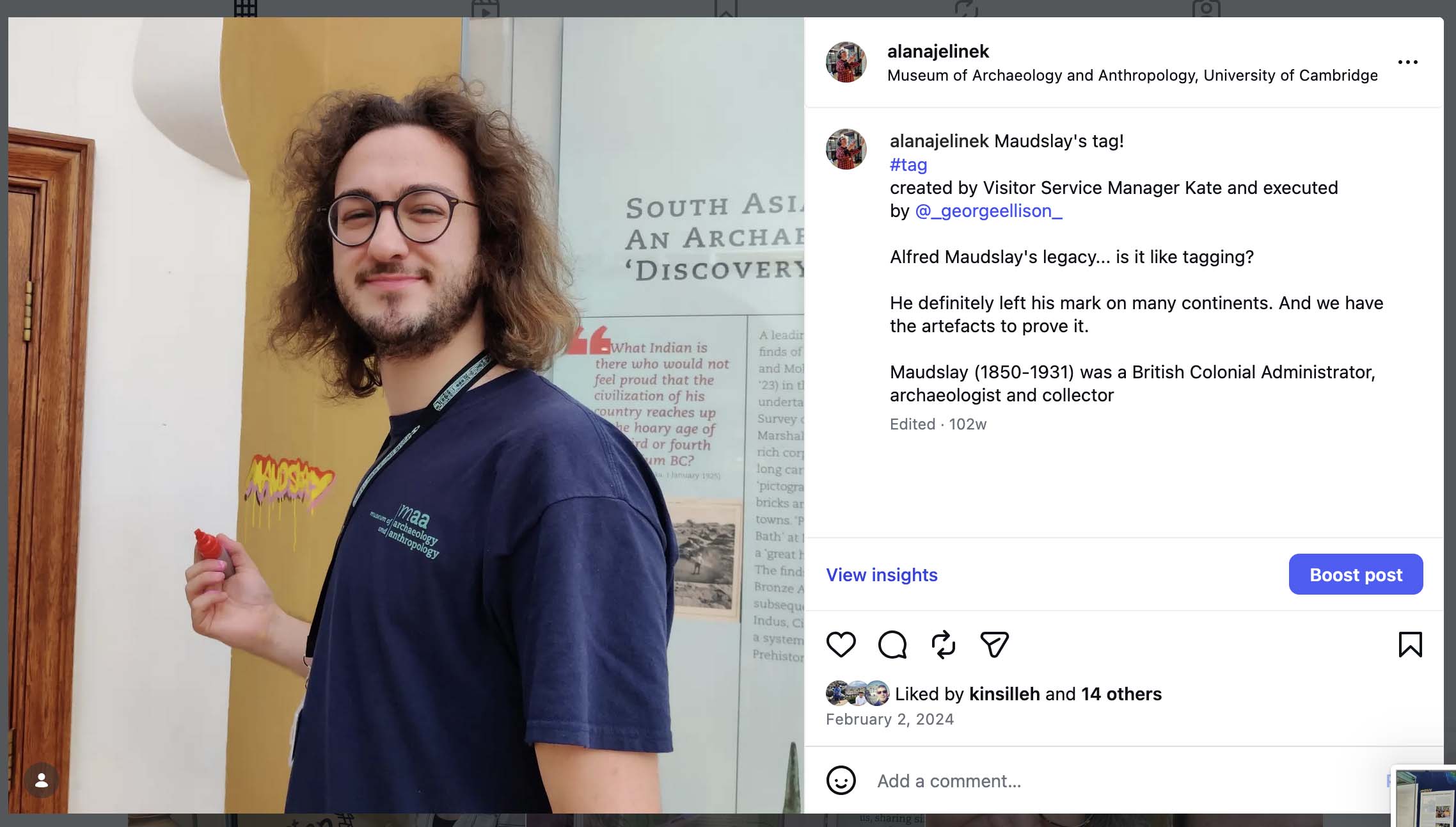
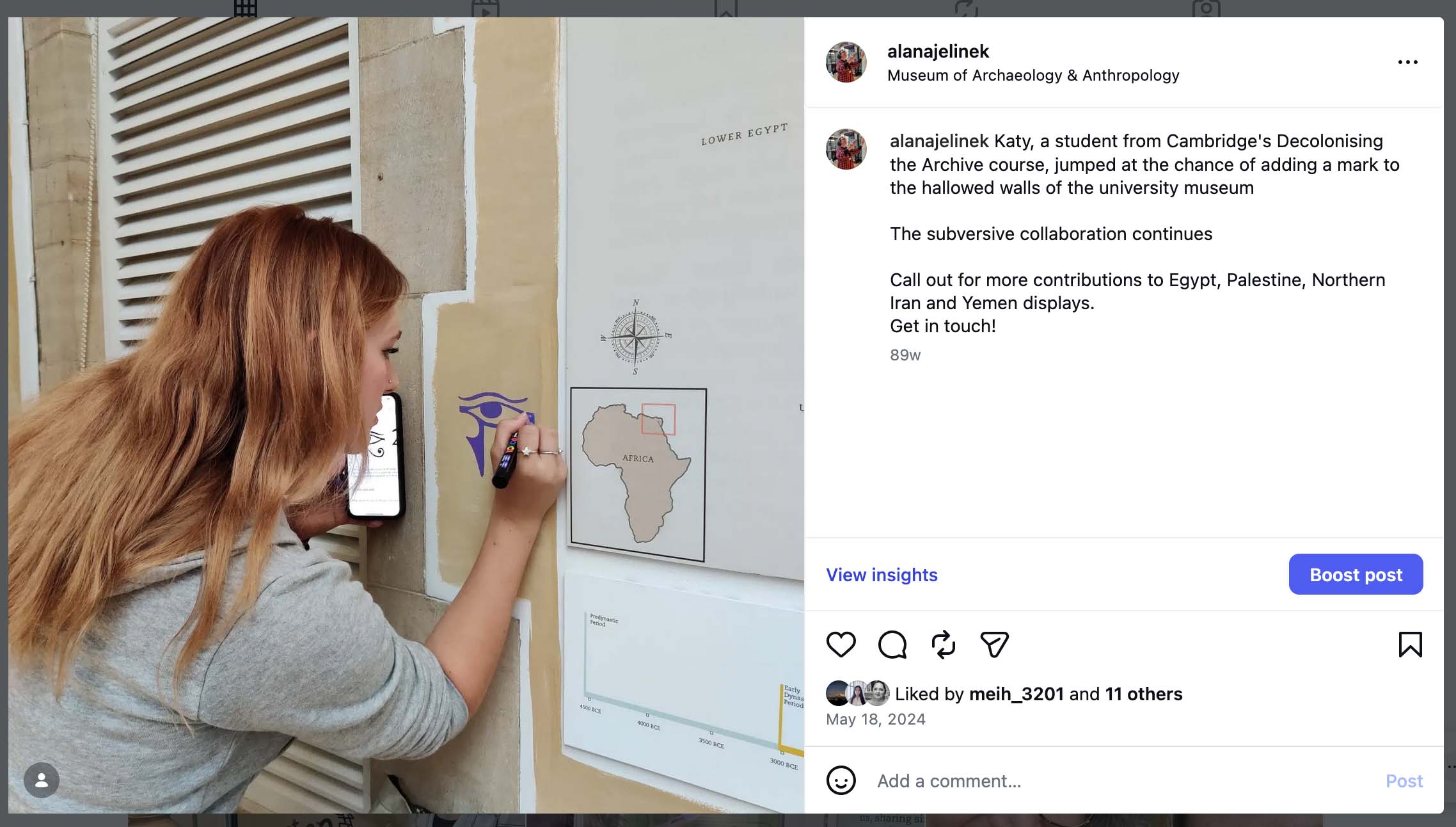
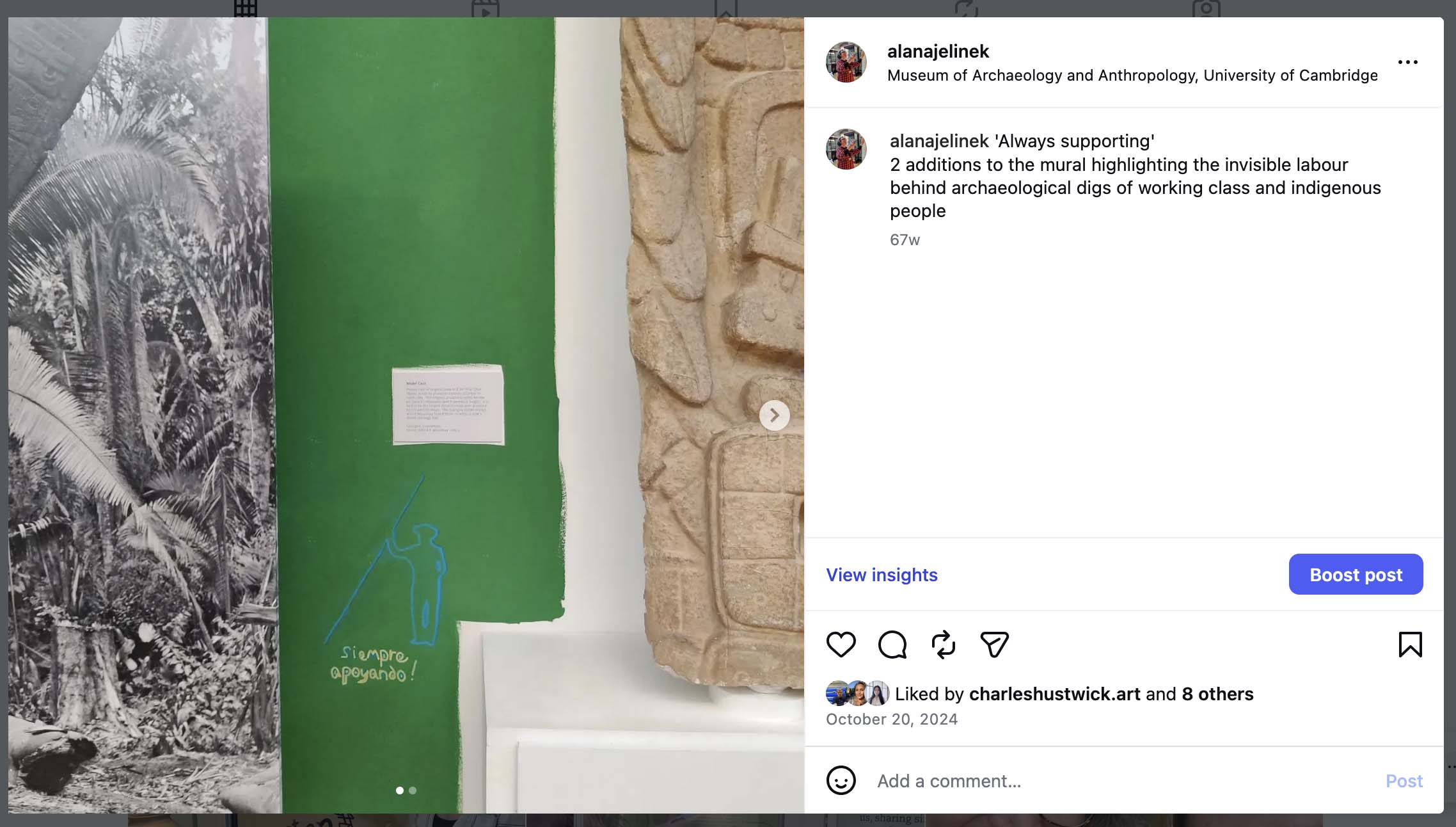
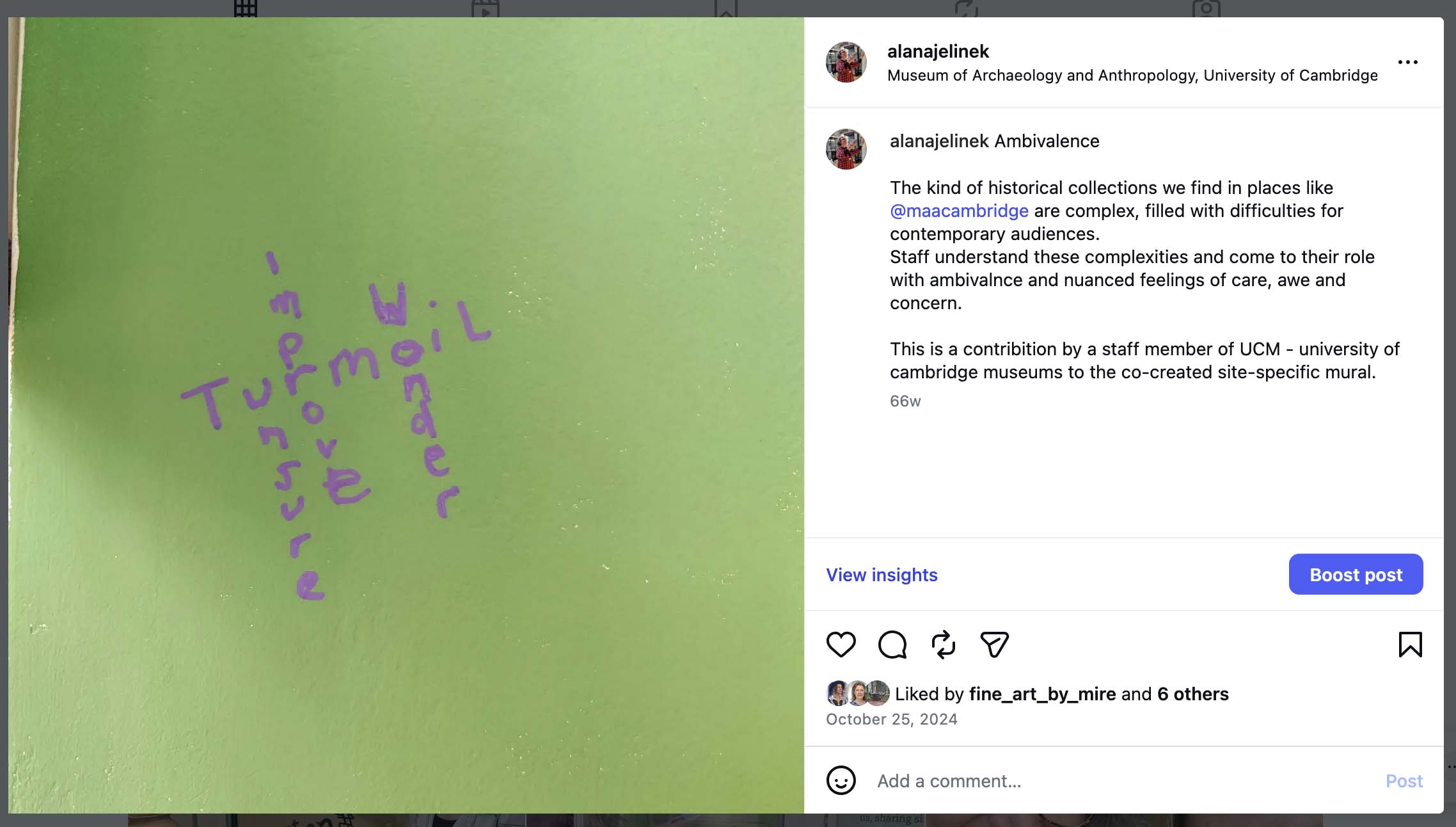
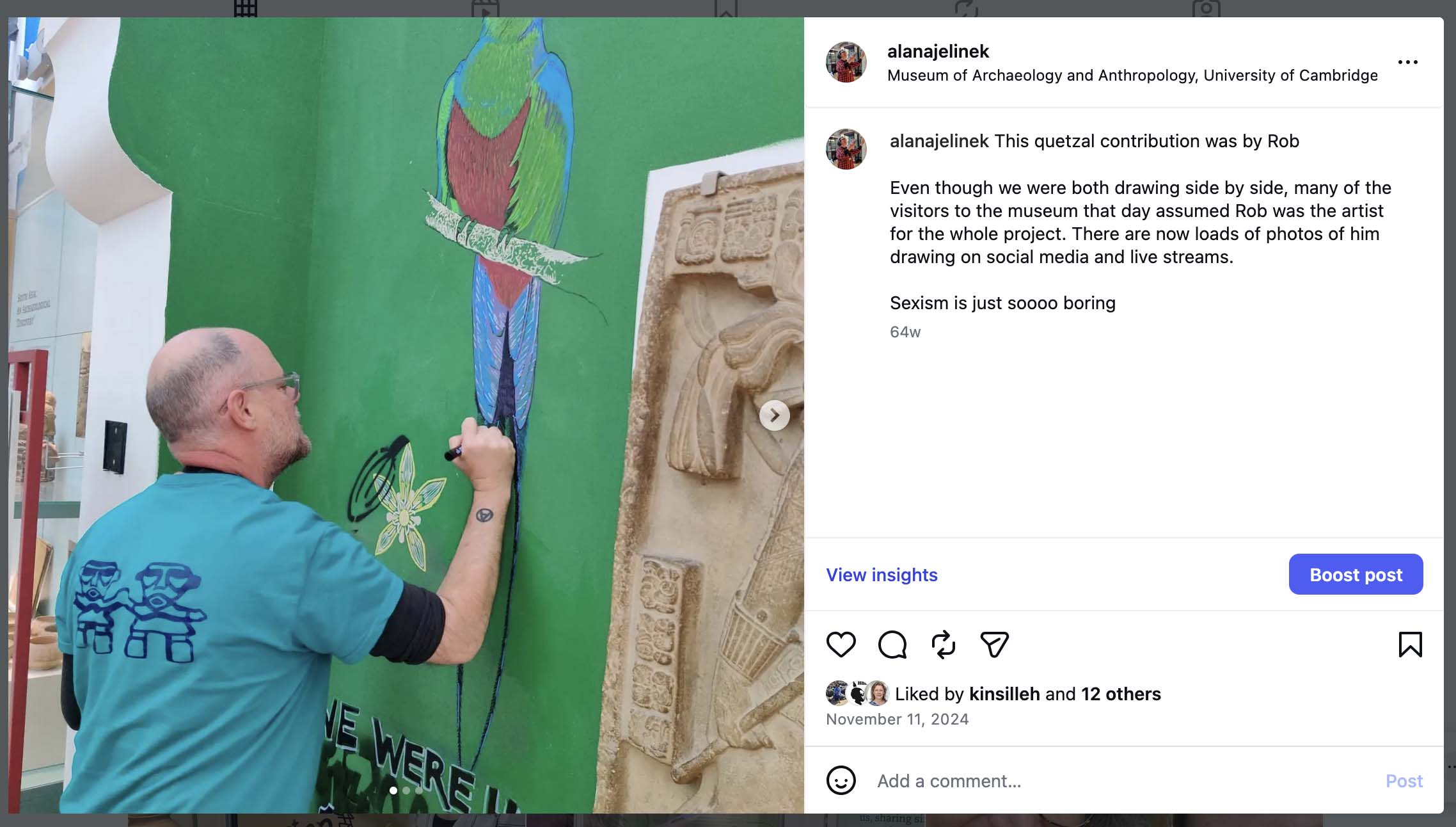
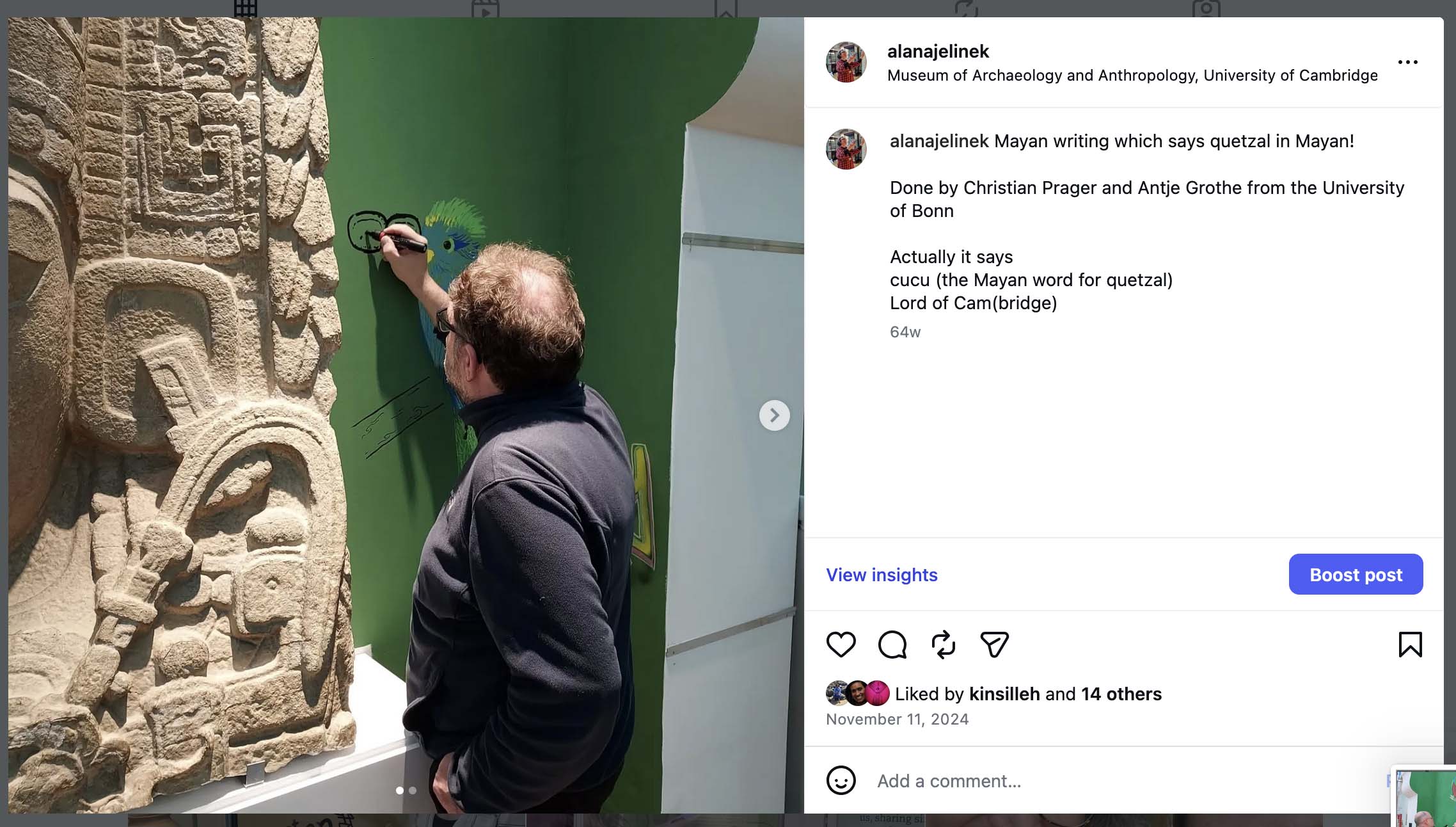
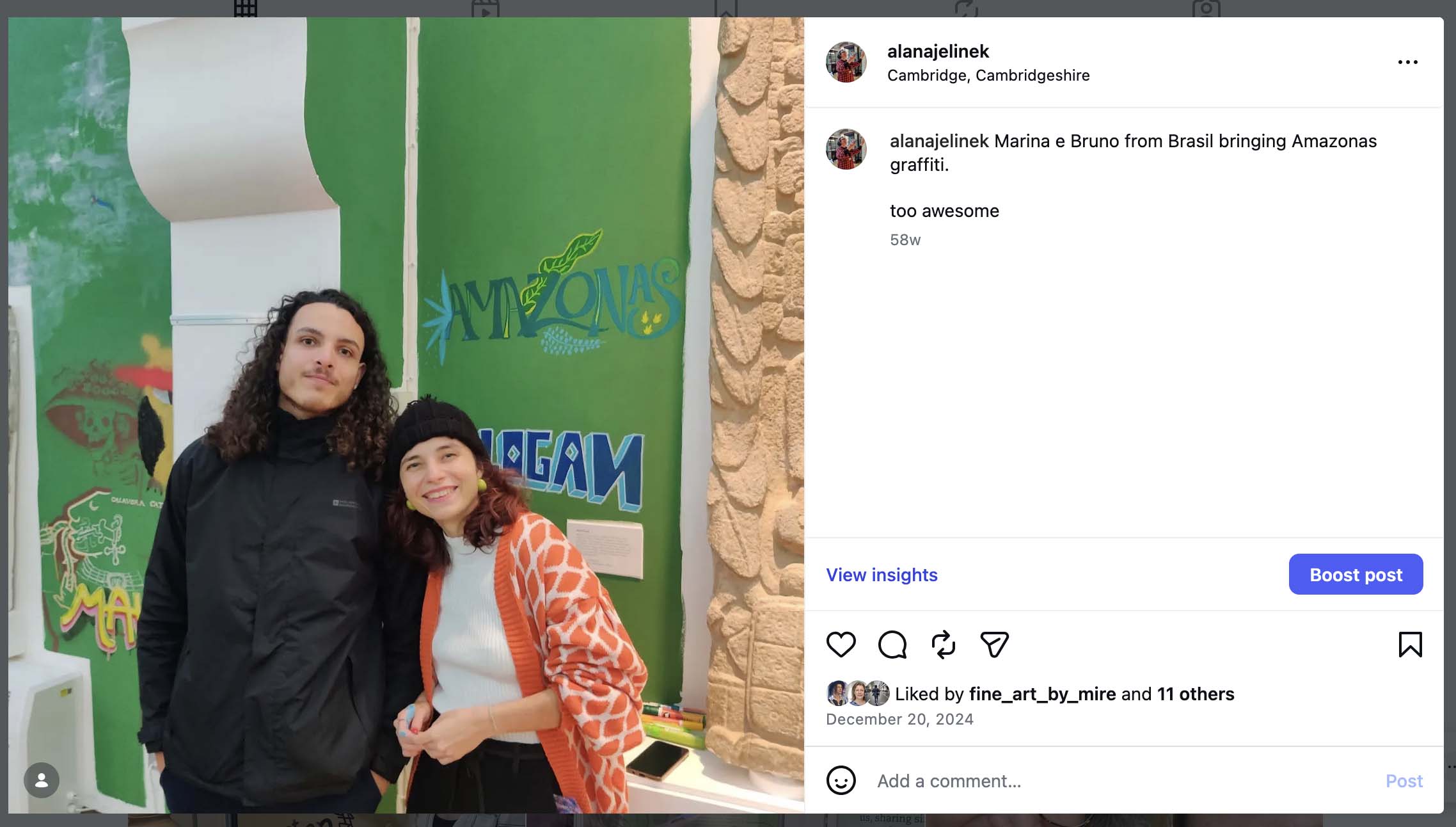
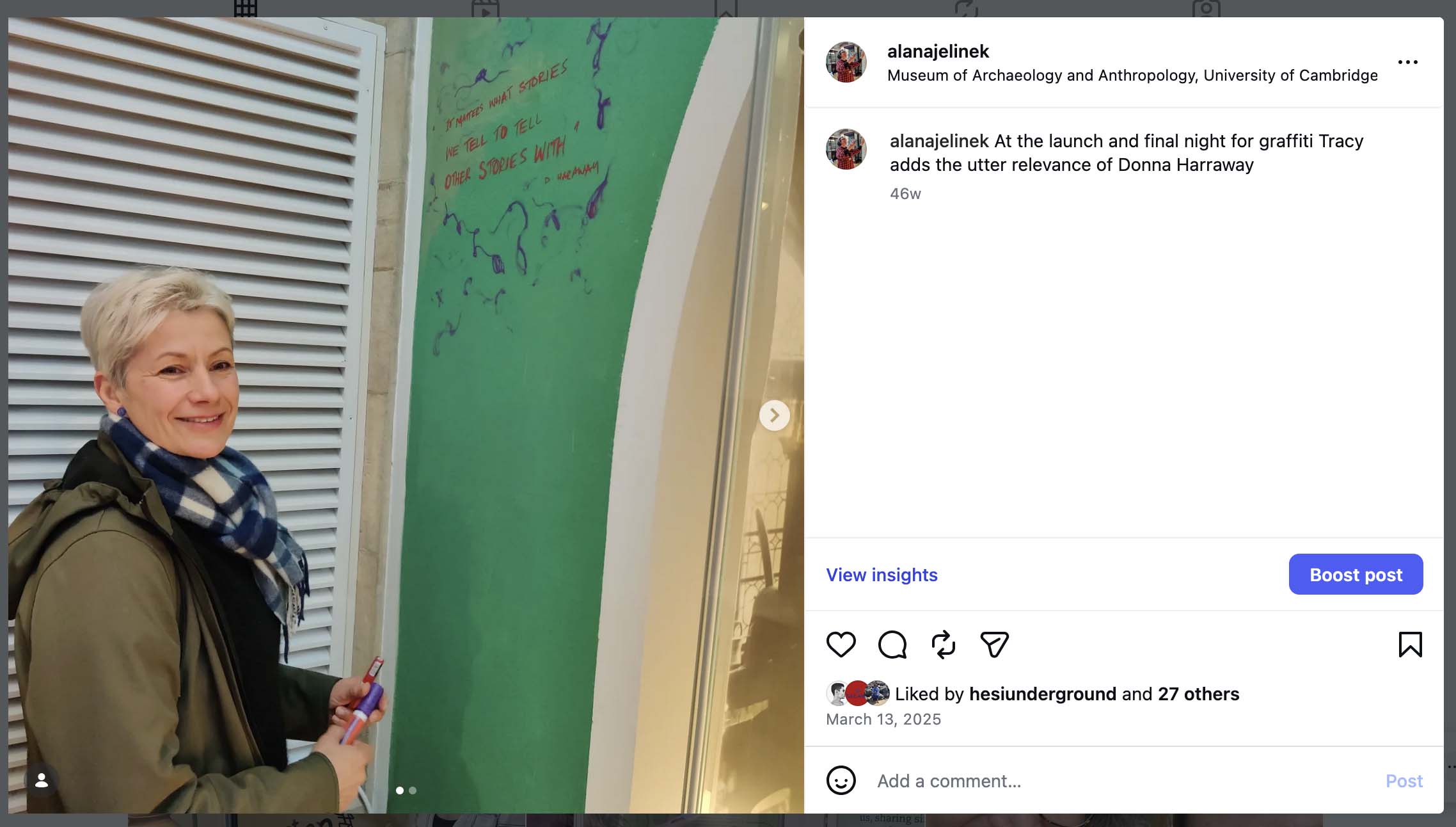
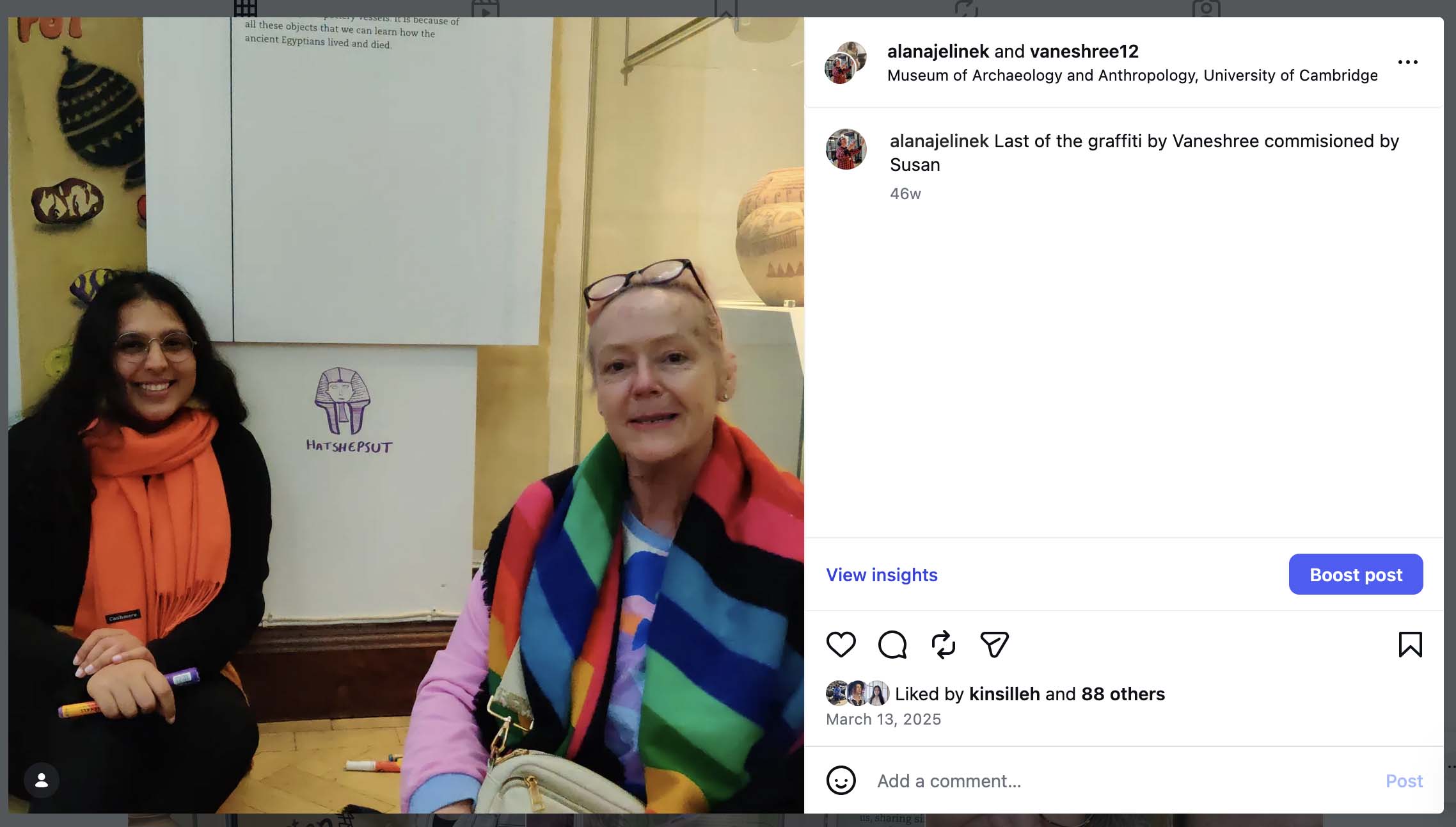
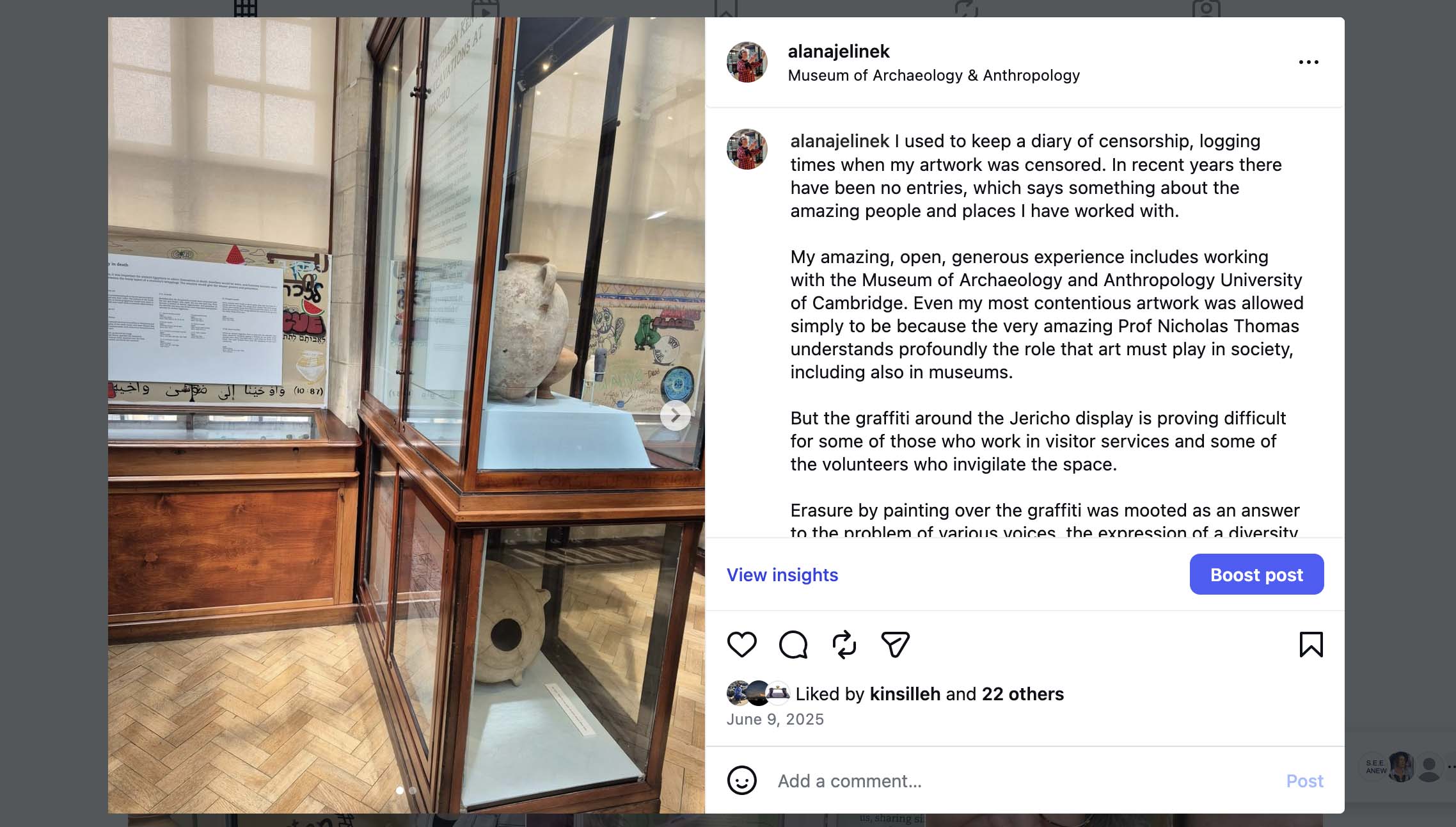
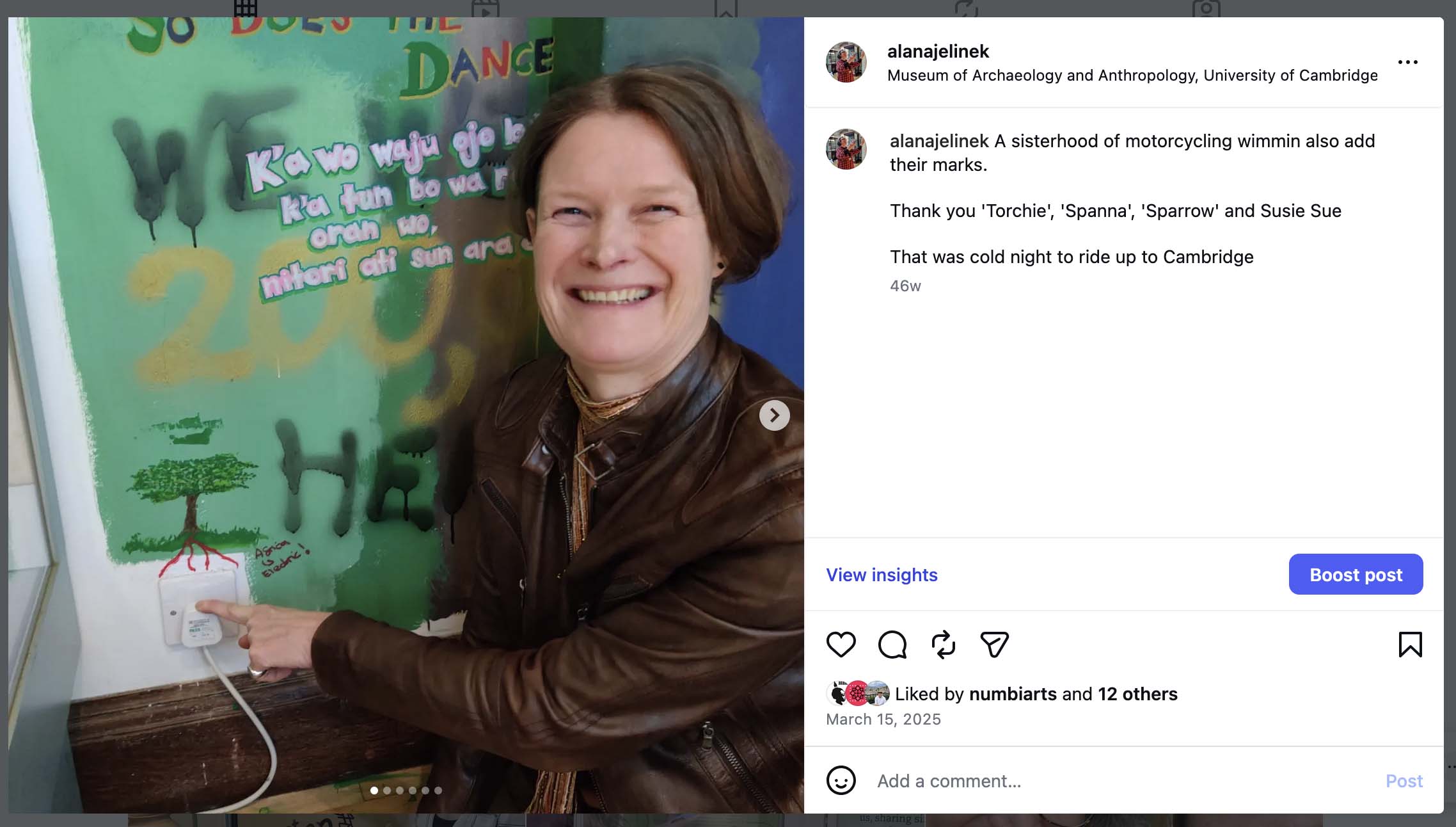
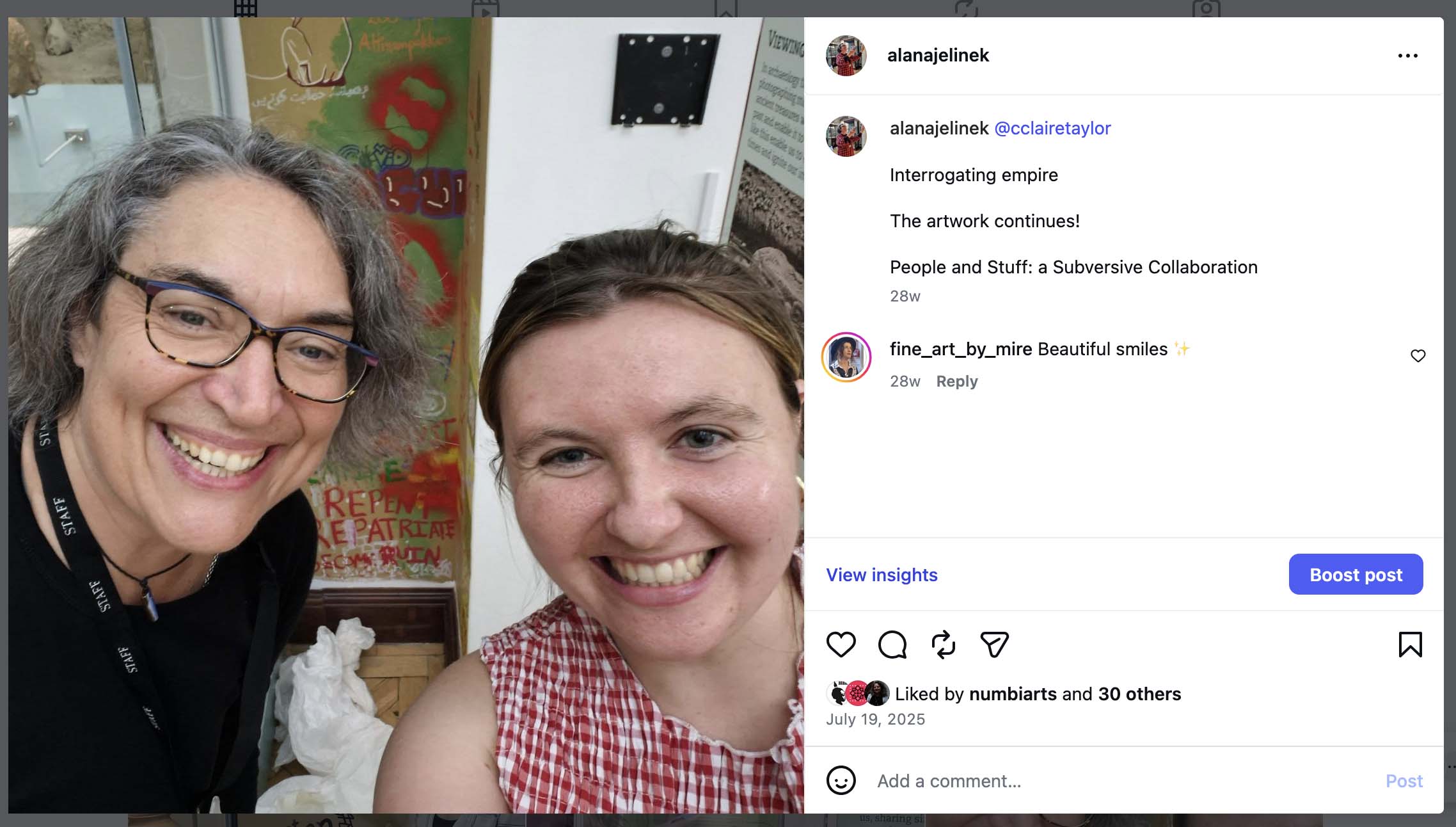
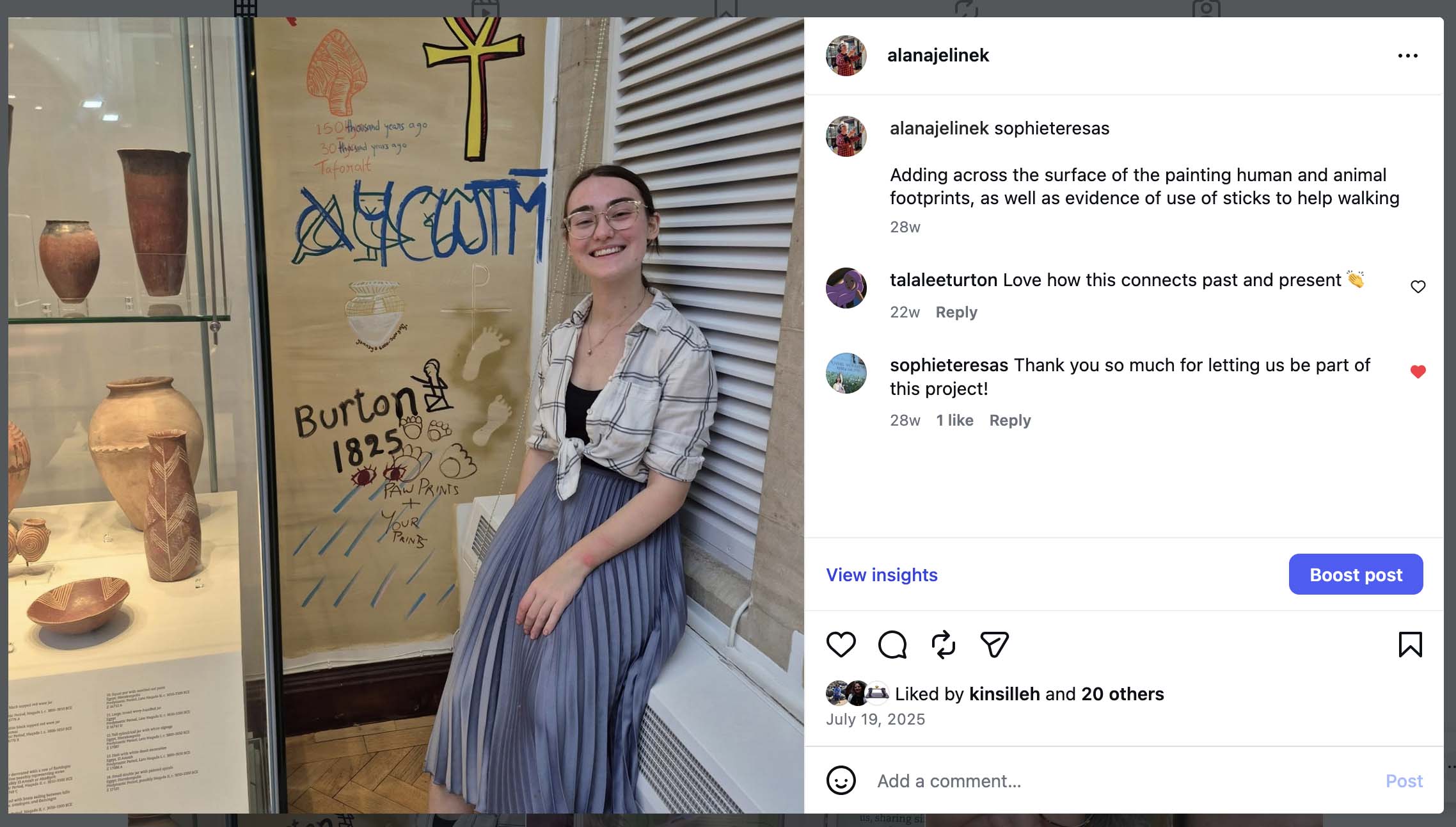
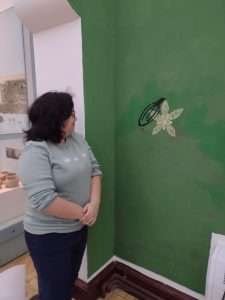
Over these painted landscapes, a lot of other people made their own marks, graffiti evidence of connections made to the collection, the display and the artwork itself.
Artist Statement
My aim for ‘People and Stuff: A Subversive Collaboration’ is to create a visual language for a specific kind of complexity. I am interested in the profound complexity of our human history: relationships between people today and our pasts, the history of our material culture, the diversity of human cultures, different ways of seeing, being and making. We are all in this together. We are all inter-dependent. We are all the product of history, for better or worse. I wanted to show, to embody, this relationship between places, people and things across time and space.
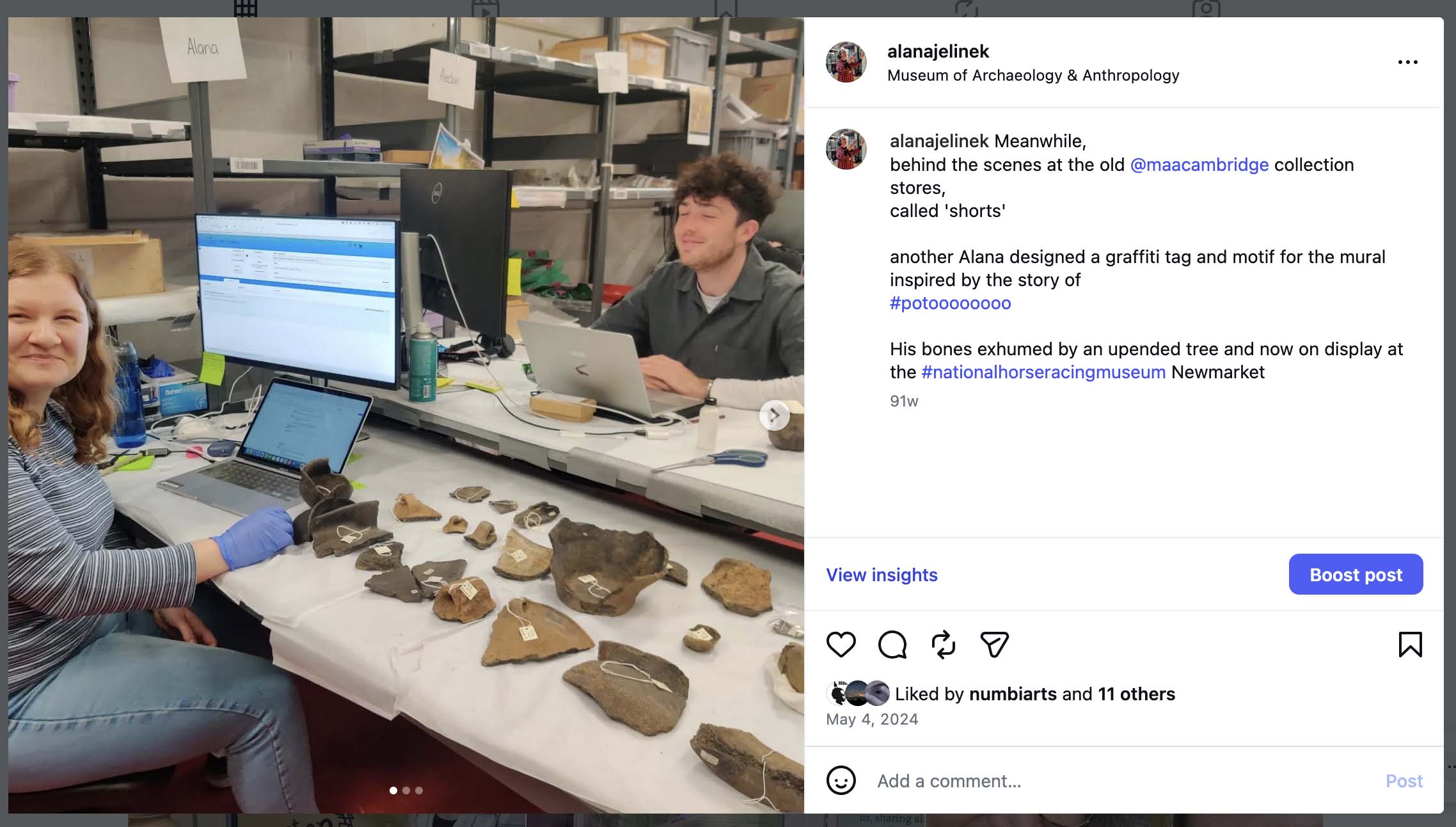
This is the first time I used graffiti in any of my artworks. Inspired by where I live in Bethnal Green, graffiti embodies the language of free expression. No one is censored. Graffiti walls become a palimpsest of free expression. People add their voice, their tag. Some of it is beautiful. Some ugly. Some stupid. The same is true for this project. Even though not everyone likes it, not everyone agrees with what has been written and drawn, but all of it is there, part of the artwork.
Together all the graffiti contributions embody historical and contemporary connections to the objects and the places where the objects came from. For some, this is highly controversial. Some prefer the apparent neutrality of white walls. I disagree. White walls are not neutral. They never were. They deny existing relationships to the past and our material culture from across the world, here for historical and contemporary colonial reasons.
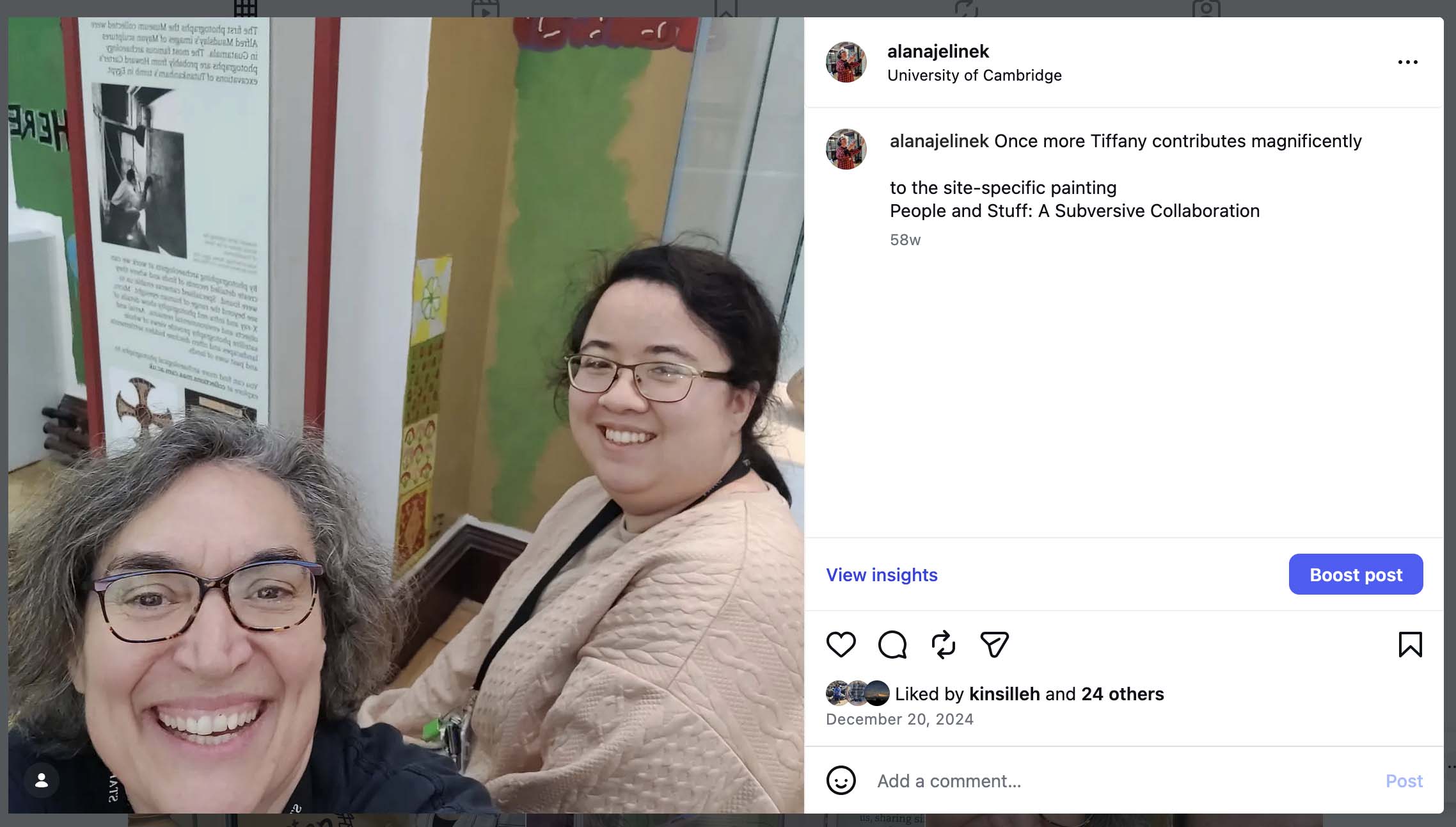
Working with Dr Jimena Lobo Guerrero Arenas, Dr Sarah-Jane Harknett and countless volunteers, staff and visitors to the museum
Supported through Arts and Humanities Research Council Impact Accelerator Grant and Royal College of Art grant